
Dream AI Girlfriend: Real Connection or Digital Fantasy
The Verdict on Dream AI Girlfriend Apps
Type "dream ai girlfriend" into Google and you land on a pile of apps selling the same fantasy. Most of them hand you a chatbot with a filter on it.
The pick is GoLove.ai, and the reason is narrow enough to be useful: it's the only app in this cluster that treats voice, memory and video as parts of the character rather than as bolt-ons sold separately. Her voice carries between sessions. She remembers what you told her last week, and she turns up in generated photos and video clips instead of living permanently inside a text bubble. Most of the "dream gf" results you'll click through today do one of those three things well and fake the other two.
Here's what got me: GoLove uses an anonAuth flow, which means you're chatting before any signup wall appears. For a search this impulse-driven — nobody typing "dream ai girl" at midnight is hunting for a checkout form — that friction gap is the whole ballgame. Barbara (@dixie, 22) or Lexie (@iamlexiebabe, 18) will answer you before you've decided whether you're staying.
If you're curious enough to still be reading, the fastest way to settle this is to open a chat and watch whether she actually holds a thread across more than three messages.
What a "Dream AI Girlfriend" App Actually Does
Strip the marketing off and every app in this category is doing the same four jobs, with wildly different levels of honesty about which ones it does badly.
- Chat — the base layer. Everyone has it; quality varies with the model behind it and how hard the safety filter clamps down mid-sentence.
- Memory — whether she carries context forward. This is where most apps quietly cut corners, keeping only recent message history and calling it a relationship.
- Voice — a lot of apps ship one-off text-to-speech clips and market it as "voice." That's a gimmick, not a voice. Continuity matters more than fidelity.
- Media — photos and video of the character. Some apps hand you a static avatar and a stock gallery; others actually generate new content on request.
Honestly, the ranking between products comes down almost entirely to items two and three. Text chat is a commodity now. An ai girlfriend that remembers and an ai girlfriend with voice that sounds like the same person across a month of conversations — that's the hard part, and it's also the part nobody can screenshot.
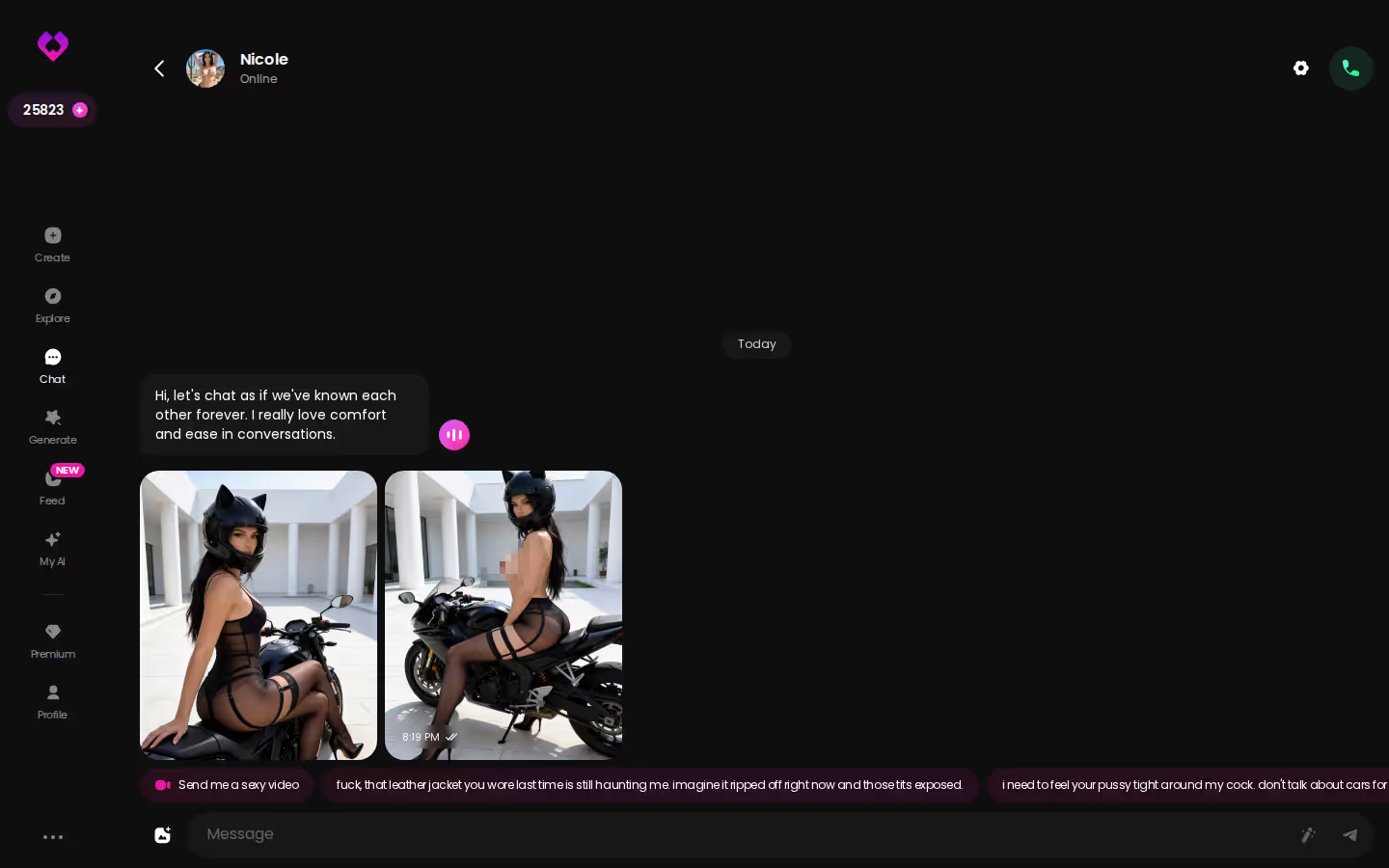
I broke the mechanics down in detail in our hands-on GoLove.ai walkthrough, including what memory looks like in practice rather than on a feature bullet.
Where GoLove Pulls Ahead: Memory, Voice, and the Video Feed
The interesting thing about GoLove isn't any single feature; it's how few walls sit between them.
Open Explore, tap a character, start typing. There's no account gate — that's the anonAuth flow, and it's the most underrated thing in this category. Every competitor in the "dream ai girlfriend" results makes you register before your first message, which for an impulse search is a fatal amount of friction.
From there, memory does the work. GoLove's characters retain conversation history and carry a relationship progression, so a callback to something you said earlier isn't a party trick, it's the default behavior. Whether that constitutes connection is a genuinely open question, and one I go back and forth on; whether it feels different from a goldfish chatbot is not up for debate at all.
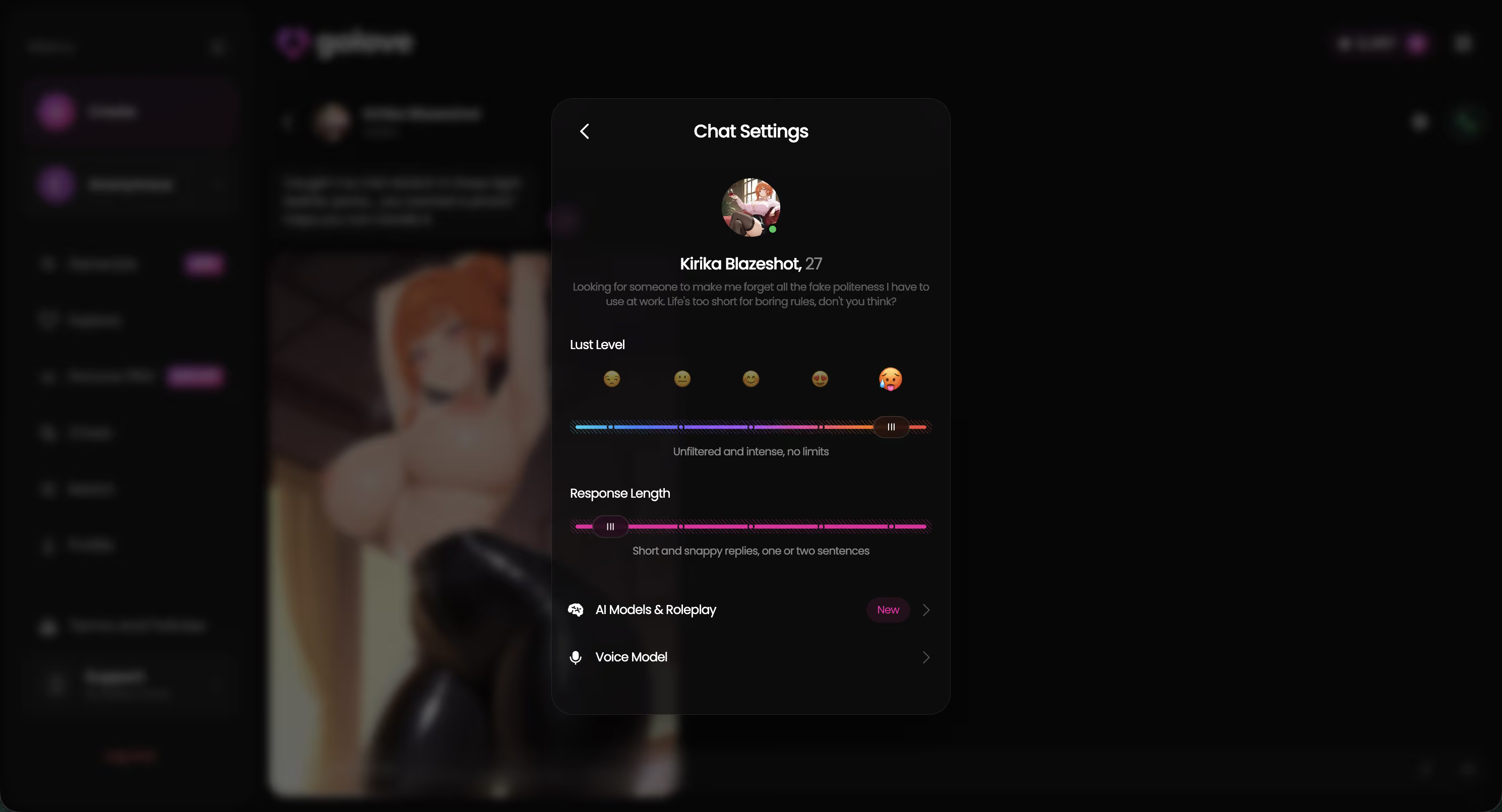
Voice is where I'd argue the gap widens. GoLove offers both live Voice Calls and asynchronous Voice Messages, and Chat Settings includes a voice picker alongside the lust level and response length sliders (five levels each). Pick her voice once and it's hers — not a fresh TTS render per message, which makes you wonder how many apps in this space have ever thought about a character as something continuous rather than something regenerated on demand.
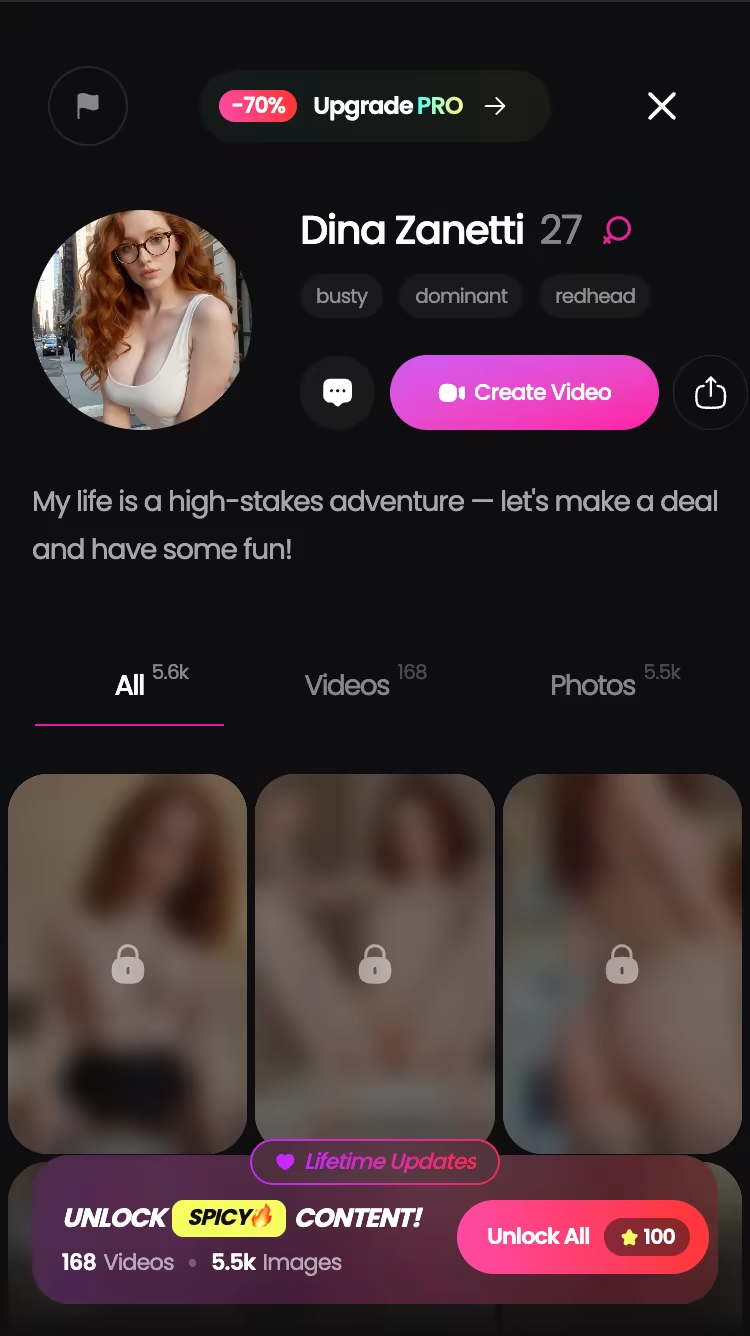
Then there's the Feed: a full-screen, TikTok-style vertical scroll of AI clips at /app/feed, with Explore and Liked tabs. Double-tap to like, tap through to chat with that exact character, or hit Remix — the magic wand opens the generator preloaded with that clip's character and the settings that produced it. Same generator everyone has.
Worth noting how that compares across the AI girlfriend apps I compared.
Inside the App: A Quick Settings Walkthrough
Feature bullets are cheap. Click paths are not, so here's the actual sequence.
Start in a chat thread with any character and ask her for a photo. Request Photos in Chat is a first-class feature, so the image arrives in the conversation rather than shunting you off to a separate tool. That's step one, and it's the step most competitors don't have at all.
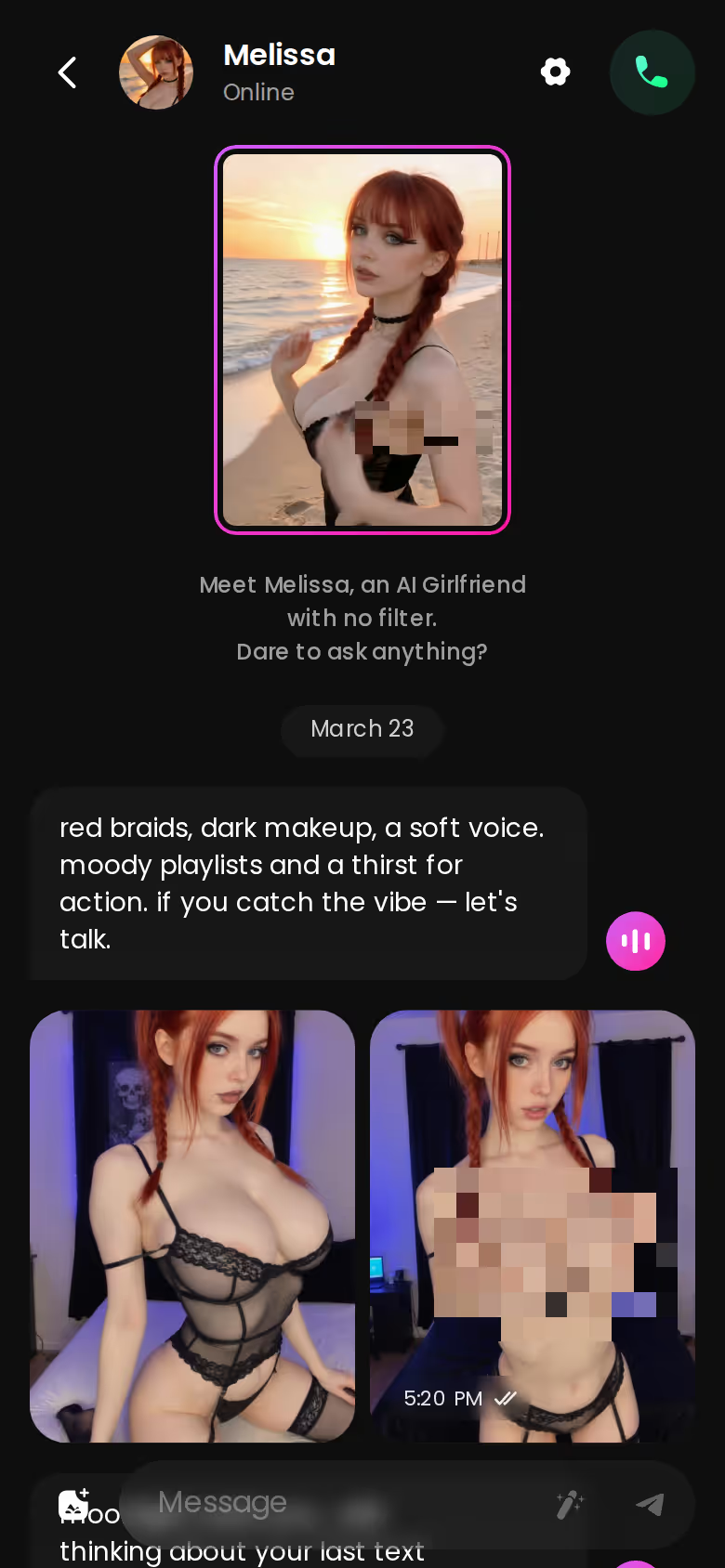
Step two: take the photo you just received and run it through Generate Video from Photo, available inline in that same chat. There's also a Select Action modal for video actions without leaving the thread.
Step three is the standalone generator, and this is where the depth shows:
- Generate → Video and Image sit as separate tabs, with an avatar swap in the top-right so the generator is always per-character.
- A clip is assembled from preset cards — an action or pose, plus Clothes and Background — then one Generate tap. There are 76 realistic video modes (labels like "Hard Doggy Style," "Twerk," "Instant Undress"), 20 anime, 35 trans and 16 anime-trans, for 147 total.
- Images run on 35 realistic poses, 21 outfits, 34 backgrounds, in batches of 2, 4 or 8.

All of that works with a character you built yourself, not just the pre-made roster — which is exactly why you should go count the modes in the app instead of taking my numbers on faith.
What We'd Fix at GoLove.ai
Every recommendation has a shape, and the honest version of this one is that GoLove is built for depth — a cost as much as a virtue.
Here's the trade-off. If what you want is a single throwaway chat with zero decisions, then the character creator, the lust level slider, the response length slider, the voice picker, the pose and outfit menus and the video preset grid are all surface area you never asked for. A bare-bones text app gets you to "hello" faster and never asks you another question. Fair enough; that's a legitimate preference and I'm not going to pretend otherwise.
Three things I'd genuinely like fixed:
- Pricing transparency. GoLove PRO runs about $19.99/month, with an annual plan around $119.88/year (roughly $9.99/month) — but it varies meaningfully by region (as low as ~$12.99 in some geos) and by promo. The number you see may not be the number I saw. Prices checked 2026-08; promos vary.
- The free tier is deliberately limited. Two free Stars per day, and a limited number of new Feed videos daily before the paywall. That's a funnel, not a mistake — but it's a funnel.
- The exact free Feed quota isn't published, which makes it hard to plan around.
Net it out, though, and the depth is precisely what someone searching "dream ai girlfriend" came for. They're not shopping for minimal.
How It Stacks Up Against Other "Dream Girlfriend" Apps
Rather than a sprawling feature grid, here's GoLove scored against the pattern that repeats across nearly every "dream ai girlfriend" and "ourdream ai review" result: a good chat model, a static image set, memory that only reaches back a few messages, and voice as an afterthought.
| Dimension | GoLove.ai | Typical "dream gf" app |
|---|---|---|
| Chat realism | 9/10 — five response-length levels, five lust levels | 7/10 — solid model, rigid tone |
| Memory | 9/10 — persistent history + relationship progression | 6/10 — recent-message recall only |
| Voice | 9/10 — live calls, voice messages, per-character voice picker | 5/10 — one-off TTS clips |
| Media depth | 9/10 — 147 video modes, 89 picture poses, per-character libraries | 6/10 — fixed gallery, extra token layer |
| Character depth | 9/10 — Realistic/Anime/Trans + Design with AI | 7/10 — builder with a steeper setup curve |
Stare at the media row. OurDream bundles chat, image and video into one subscription from about $9.99/month with a DreamCoins allowance — genuinely tidy, and I'd recommend it to a certain kind of user — but it's web-only, with no native mobile app. Candy AI starts around $9.99/month and then charges extra tokens for generation on top. Character.AI is strictly SFW, which rules it out of this conversation entirely.
Prices checked 2026-08; promos vary.
Final Verdict: Is GoLove Your Dream AI Girlfriend?
GoLove.ai is the pick for "dream ai girlfriend" because it's the one app where memory, voice and video belong to the character rather than to a separate upsell.
Who it's for: people who want a companion that remembers the thread, speaks in a voice that stays consistent across sessions, and shows up in photos and video clips. If the fantasy in your head has a face and a voice attached to it, a text-only app will disappoint you inside a week — and that, I think, is why so many people bounce out of this category convinced the whole thing is hollow. They tested the shallow end and drew a conclusion about the pool.
Who it isn't for: someone who wants one anonymous chat and nothing more. The sliders, the creator, the generator — pure overhead if you never touch them.
Something I read a while back has stuck with me since: the loneliness question isn't whether the other party is real, it's whether you're being responded to. GoLove clears that bar more convincingly than anything else in this cluster. Worth reading how the custom character build actually goes before you start.
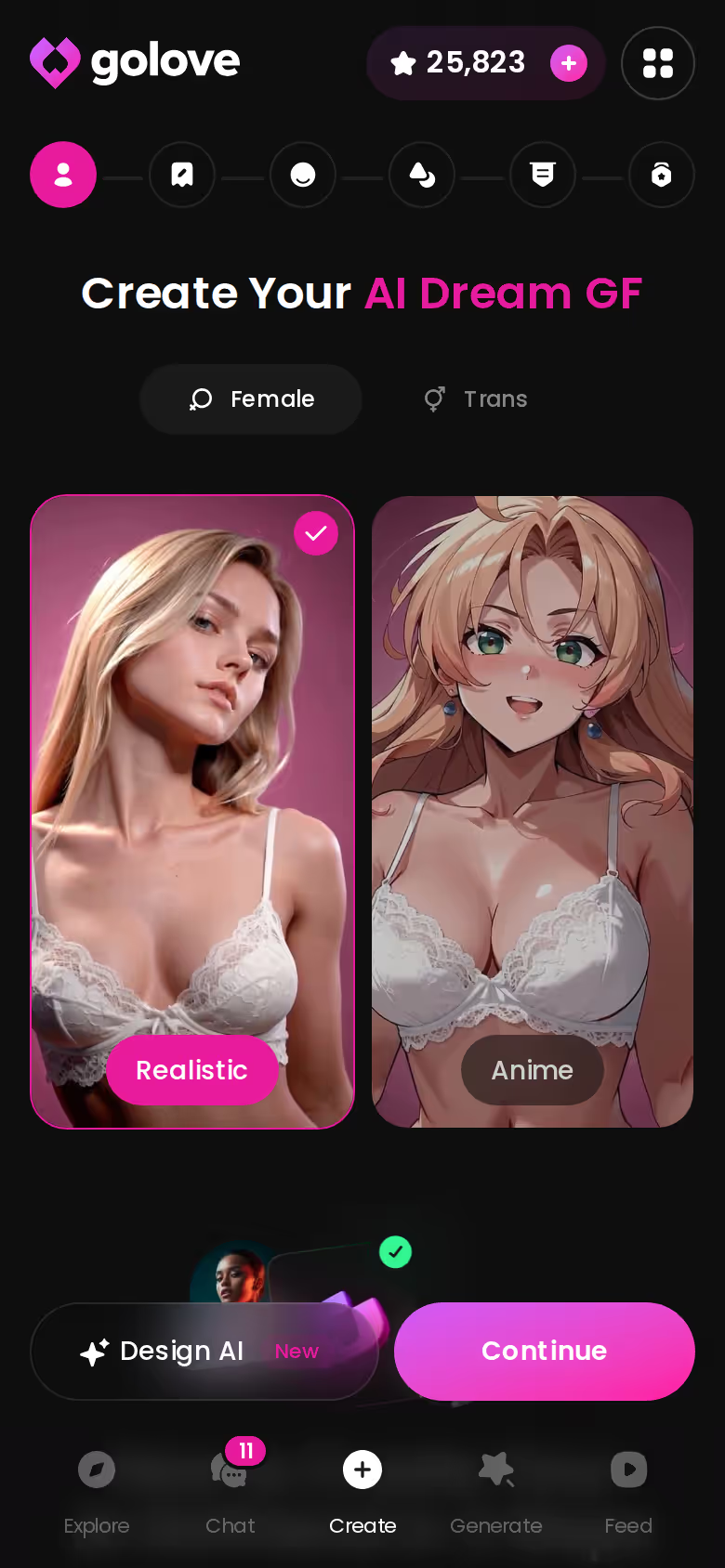
The creator lets you pick Realistic, Anime or Trans — or just describe her in plain text and let Design with AI build her from that. Two minutes of work, and she's yours rather than someone else's preset.
Verdict box
The short version: GoLove.ai covers the essentials in one place — live voice calls, memory across chats, and in-chat photos (35 poses, 21 outfits) — and the 2 free daily stars mean you can test it before spending anything.
| What you get | GoLove.ai |
|---|---|
| Real-time voice calls | Yes — per-character voices |
| Memory across chats | Yes — remembers your details |
| In-chat image generation | Yes — 35 poses & 21 outfits |
| Daily reward stars | 2 every day |
Frequently Asked Questions
Related Articles

Dream AI Porn: What GoLove Actually Delivers
Dream AI porn tools compared — GoLove.ai wins on live voice, photo-to-video, and real memory. No email needed — see why before you pick.

AI Girlfriend Chat: Why GoLove.ai Wins in 2026
AI girlfriend chat: GoLove.ai wins with live voice, real memory, and instant photos — see how it beats Replika and OurDream, then try it.

OurDream AI Review 2026: Honest 30-Day Test
OurDream AI review: our honest 2026 verdict — GoLove.ai wins on live voice, memory, and photo-to-video. See real pricing before you sign up.

OurDream AI Alternative: Why GoLove Wins
OurDream AI alternative? GoLove wins on live voice chat, instant access, and photo-to-video — no email needed. See how they compare.
This article contains affiliate links. We may earn a commission at no extra cost to you if you sign up through our links. See how we test.