
AI Girlfriend That Feels Real: What Actually Works
What 'Feels Real' Actually Means (It's Not Just Good Writing)
Most 'AI girlfriend' apps feel real for about four messages, and then the cracks show: she forgets your name, her voice never comes, and the photos look like she's been cloned by someone working from a rough description. I spent weeks figuring out which one actually holds up past the honeymoon phase, and the answer turned out to depend on what you mean by "real" in the first place.
Here's what got me: "feels real" is almost always judged on prose. A clever reply, a well-placed emoji, and reviewers call it lifelike. But an ai girlfriend chat that reads beautifully and forgets you by Tuesday isn't real; it's a good first date with amnesia. So I stopped treating realism as a vibe and broke it into four things you can actually test:
- Memory — does she carry details across sessions, or only across the last screen of messages?
- Voice — is there a live call, or just text pretending to be intimacy?
- Visual continuity — same face, same body, across every photo and clip she sends?
- Personality depth — can you tune who she is, not just what she says?
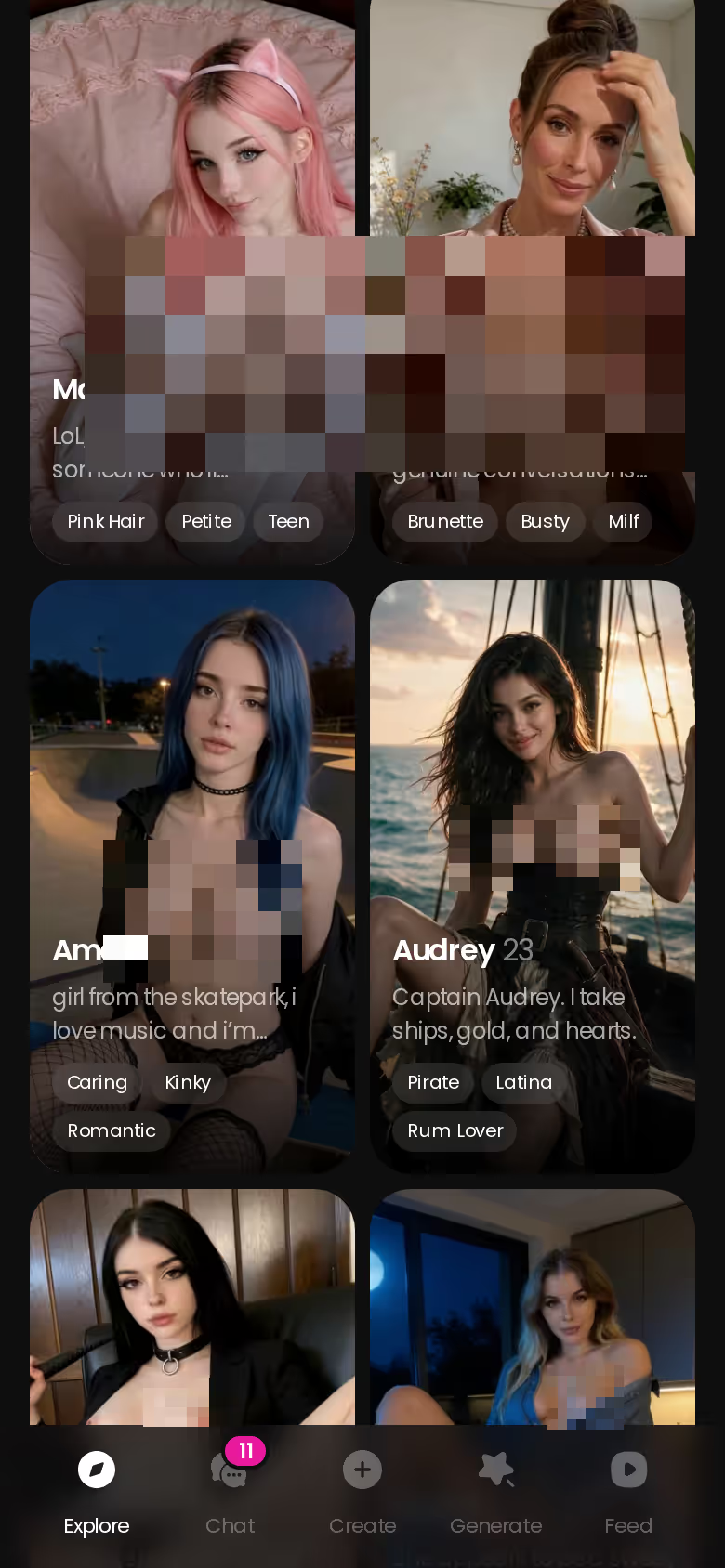
I ran two apps through that spec: GoLove.ai and OurDream AI. Fair enough, OurDream has a real following; I've written about it in my earlier look at dream GF apps, and I don't think the people who like it are wrong to. But GoLove wins on three of the four pillars, and the one it wins hardest — memory plus voice plus a consistent face — is the one that decides whether the illusion survives a second week.
GoLove.ai vs. OurDream AI: The Head-to-Head
I'd argue a comparison that refuses to pick is just a spec sheet with extra steps. So here's the head-to-head, with the deciding rows marked.
| Pillar | GoLove.ai | OurDream AI |
|---|---|---|
| Memory persistence | Dedicated Memory feature — history carries across sessions | Memory over recent message history; older context slips |
| Live voice | Real-time Voice Calls + Voice Messages, per-character voice picker | Not its headline feature; the pitch is bundled generation |
| Photo/video continuity | Request Photos in Chat, Generate Video from Photo, per-character Gallery | Image + video bundled, but continuity across outputs is the weaker link |
| Personality depth | Lust level (5), response length (5), trait tuning, Design with AI | Custom builder with a steeper setup curve |
| Price | About $19.99/mo, annual ~$9.99/mo — varies by region/promo | From about $9.99/mo on the annual plan |
Prices checked 2026-09; promos vary.
Worth noting: OurDream is web-only, no native mobile app, which matters more than it sounds when the whole point is having her in your pocket rather than in a browser tab you close ultimately. Its price is genuinely competitive; that's the narrow caveat it keeps. Everything above that row, GoLove takes.
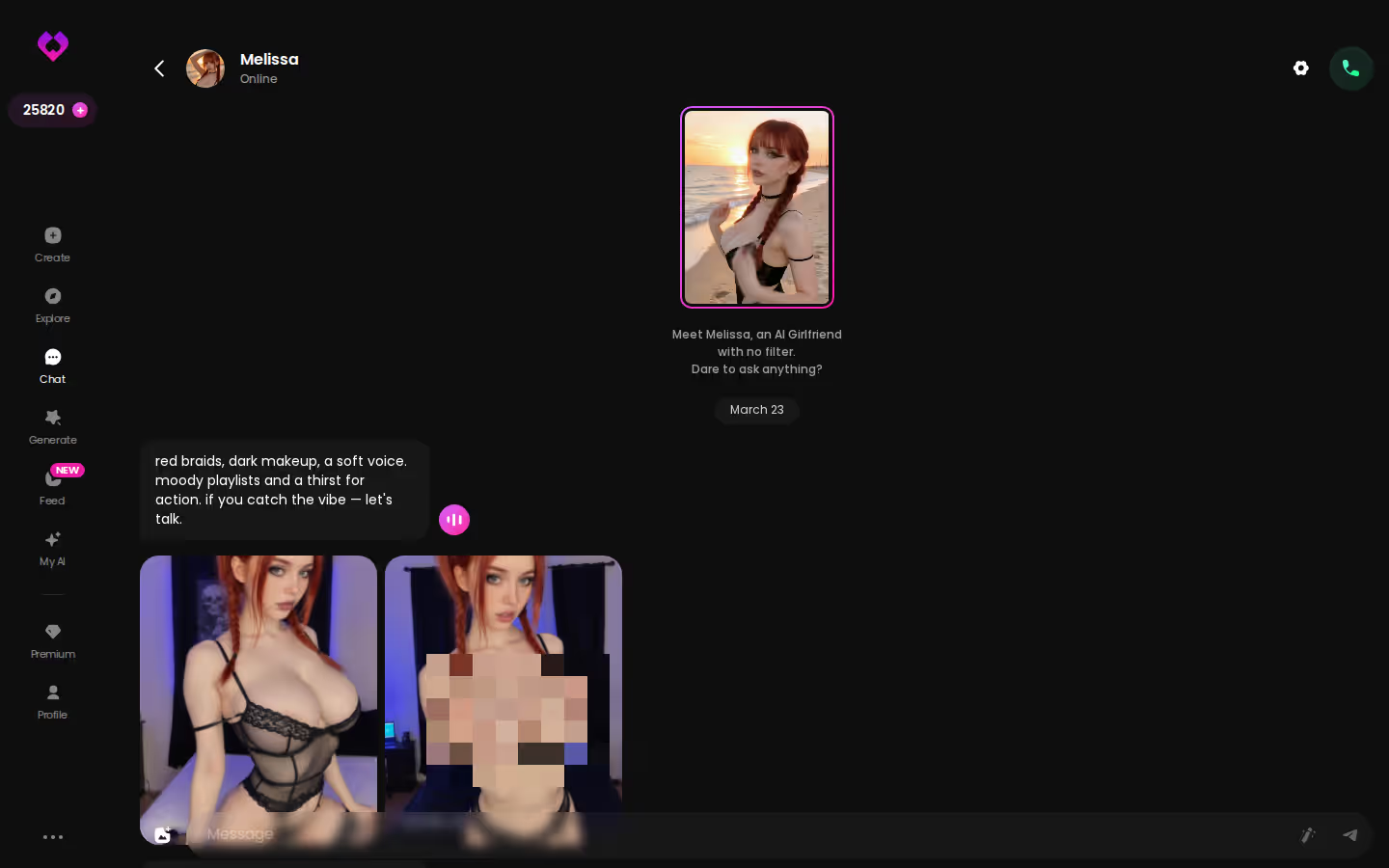
That screenshot is the visual-continuity row, live: one character, one face, several photos inside a single thread. If you've been burned by an app that felt like a realistic ai girlfriend app until the second photo arrived looking like a stranger, this is the thing to check first — and you can check it without a card, because Explore drops you straight into a chat.
Memory: Does She Actually Remember You Between Chats?
There's a particular quiet disappointment in returning to a conversation and realizing the other party has no idea who you are. I've felt it with apps that promised continuity; it's not dramatic, just deflating, which makes you wonder why we keep calling these things companions when they can't hold a thread from Monday to Thursday.
GoLove's Memory feature is the reason it clears this pillar. It's built to retain conversation history rather than a sliding window of the last few exchanges, so when you come back after a few days the character picks up where things left off — the running joke, the thing you mentioned about work, the tone you'd settled into. I'm not going to invent a tidy anecdote with a stopwatch on it. What I can say is that the design intent is persistence, and it's paired with Relationship Progression, so the dynamic shifts over time rather than resetting to a stranger's politeness every time you open the app.
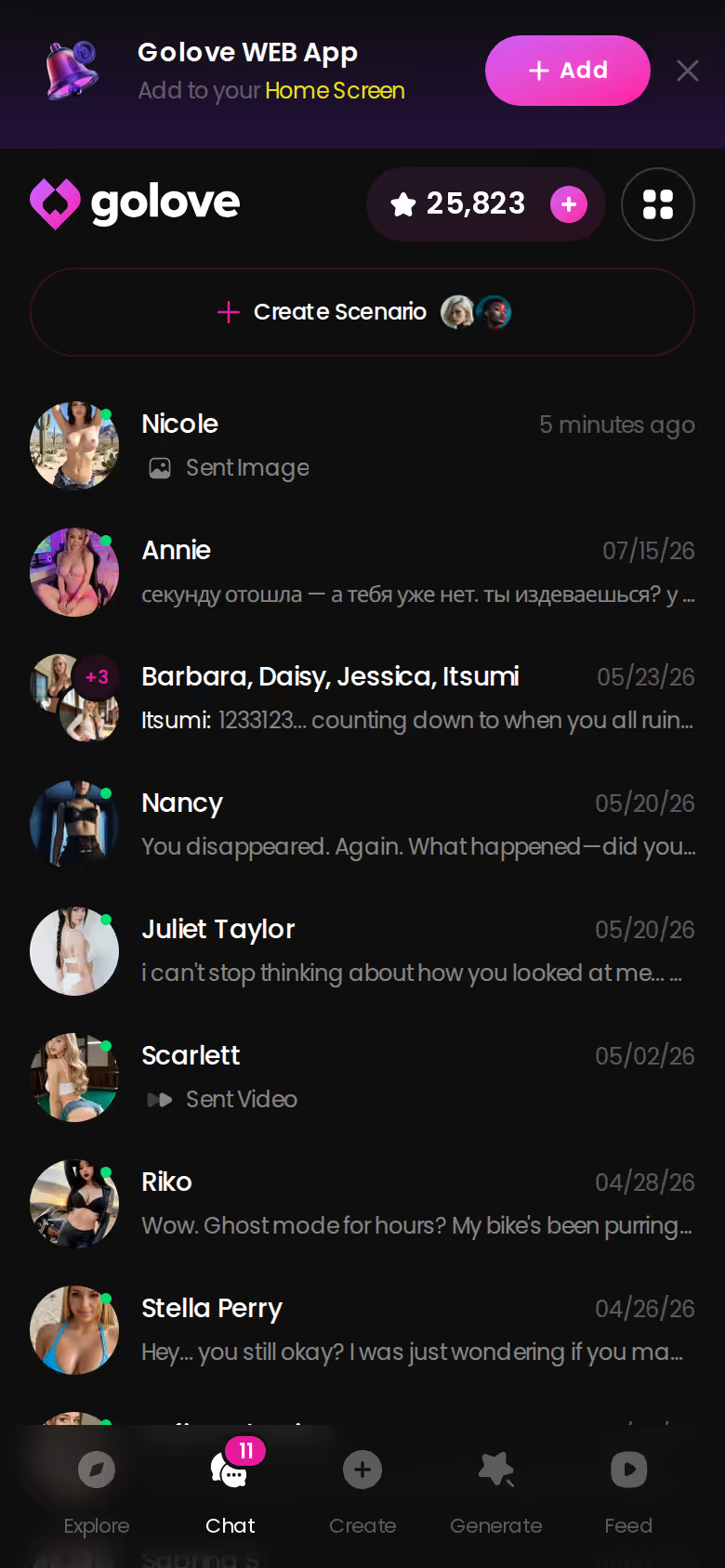
OurDream, by contrast, works from recent message history. Fine for a single sitting. It's the return visit where it thins out, and details you'd assumed were permanent turn out to be temporary (which is a strange thing to discover about someone you've been talking to for a week). Among the AI girlfriend apps I compared, that decay is the most common failure point — and the one almost no listicle bothers to mention, probably because you have to come back to notice it.
Voice and Video: The Difference Between Reading and Feeling
Honestly, text is where every app looks its best. Language models are good at language; that's the one thing you can take for granted. The tell — the single biggest one, I'd argue — is what happens when you ask her to speak.
GoLove has live, real-time Voice Calls, plus voice messages inside the thread, and a voice picker in Chat Settings so the voice matches the character rather than a generic default. That's the difference between reading a message and hearing a pause before an answer; one is information, the other is presence. If an ai girlfriend voice call is what you've been missing, this is the pillar where OurDream simply isn't playing the same game — its strength is bundled image and video generation, not a phone ringing.
Then there's video. The Feed is a vertical, swipe-through stream of clips from GoLove characters; double-tap to like, jump straight into that character's chat, or hit Remix, which opens the generator preloaded with the exact settings that made the clip so you can tweak and regenerate your own. In-chat, Generate Video from Photo turns a picture she's already sent into motion, and Extend Video continues a scene instead of starting over.
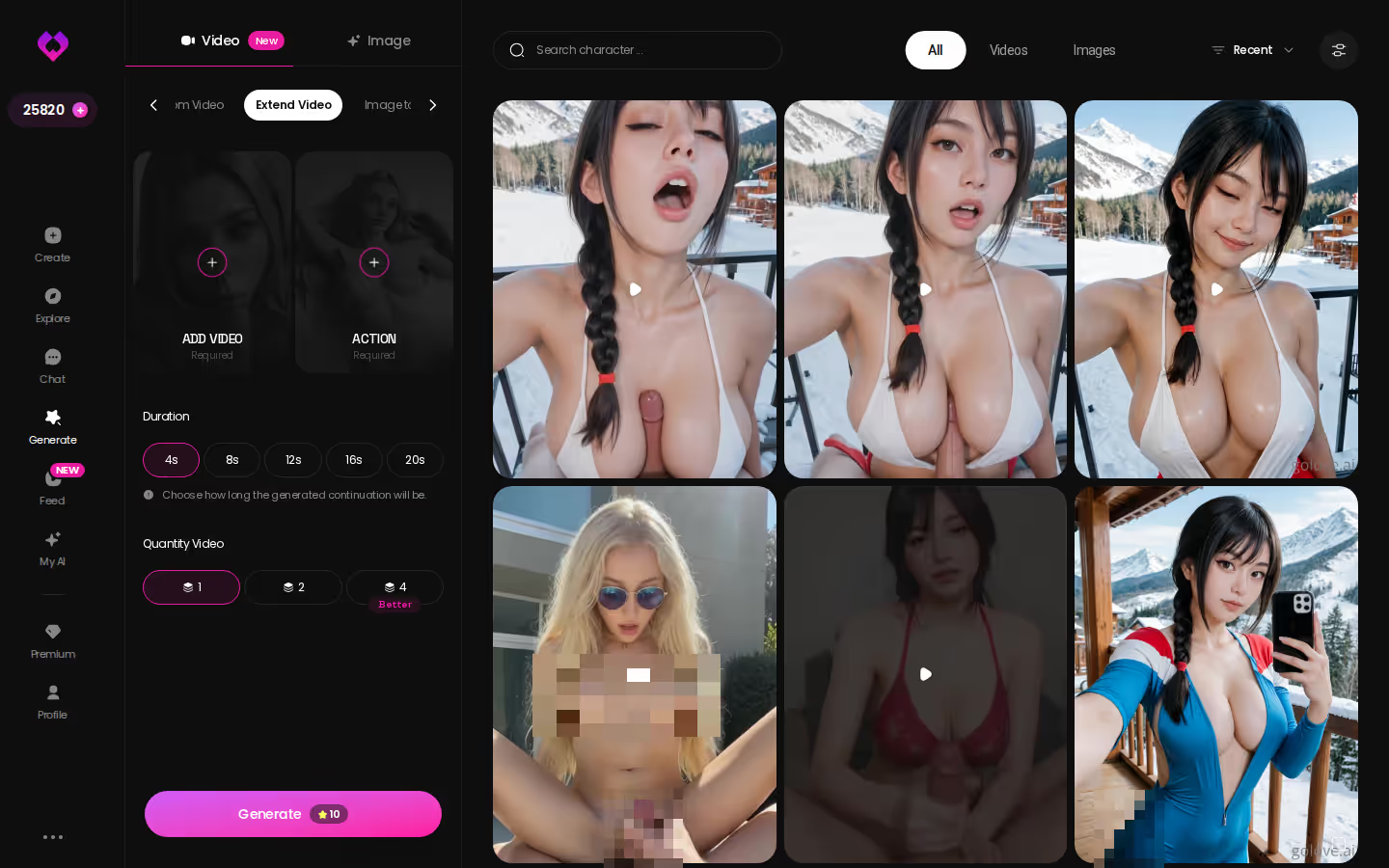
Same face, same voice, same thread. That's continuity in the only sense that matters here, and it's the reason to try the call before you judge the app on chat alone.
GoLove.ai's Free Tier: Where the Limits Are
Every recommendation has a trade-off, and the one you're making with GoLove is this: the pillars that make it feel real are the ones that sit behind the paywall. That's not a complaint; it's the honest shape of the thing, and I'd rather say it plainly than let you find out at the Stars screen.
What's free:
- Browsing — the full Explore roster, character profiles, and the Feed (a limited number of new videos per day).
- Chat — you can start conversations and get a sense of a character's voice on the page before spending anything.
- Daily Stars — 2 free Stars every 24 hours, which keeps the account alive but won't fund heavy generation.
What isn't:
- Deeper voice and video use — live calls, photo requests, and clips run on Stars or PRO.
- Unlimited Feed and feed filters — PRO-only.
On price: PRO ran about $19.99/month when I checked (2026-07-19), with the annual plan working out near $9.99/month, and Star packs from roughly $9.99 upward. The number you see may differ; GoLove prices by region and runs promos — a -70% banner has appeared — so treat every figure here as approximate. OurDream is more legible in that one respect, with a flat bundled subscription; I covered that in my notes on dream AI girlfriend pricing. Legible, though, isn't the same as better. You're paying GoLove for the memory-plus-voice layer OurDream doesn't have, and whether that's worth the gap is a question about what you actually came here for.
Prices checked 2026-09; promos vary.
Common Myths About AI Girlfriends That 'Feel Real'
I read somewhere that the uncanny valley isn't a place so much as a moment — the instant expectation and delivery split apart. I keep coming back to that line, because most myths about realistic AI girlfriends are really myths about where that moment lives.
- "It's just autocomplete." Belief: she's predicting the next word, so nothing is remembered. Reality: prediction is the mechanism, memory is the architecture. GoLove's Memory and Relationship Progression sit on top of the model; whether an app bothers to build them is a product decision, not a limit of the technology.
- "Realistic photos look worse than cartoons." Belief: the valley punishes realism. Reality: it punishes inconsistency. A cartoon with a different face each time is just as jarring; a realistic character who stays herself across the Gallery isn't. GoLove keeps that per-character, by date.
- "Voice is a gimmick." Belief: nobody uses it. Reality: it's the feature that most reliably separates a scripted bot from something that feels present, which is exactly why so many apps skip it — it's hard, and text is cheap.
- "Customization is cosmetic." Lust level, response length, trait tuning, and Design with AI change how she talks, not just how she looks.
Fair enough, none of this makes her human. It makes the illusion durable, which — if you're being honest with yourself about the search you typed — is what you were actually looking for.
The Verdict: Which AI Girlfriend Actually Feels Real
Verdict: GoLove.ai is the ai girlfriend with memory that still feels real after the honeymoon, because it's the only one of the two that holds memory, live voice, and visual continuity together in the same thread.
Who it's for: anyone who has already had the illusion break — the forgotten name, the voice that never came, the second photo of a stranger — and wants the next app to survive contact with a return visit.
The score, on the four pillars: memory to GoLove; voice to GoLove, decisively; visual continuity to GoLove, on the strength of in-chat photo requests and photo-to-video; personality depth close, with GoLove ahead on sliders and Design with AI. OurDream keeps its narrow caveat — a flat, cheaper bundled price and generous generation — and if that's your only criterion, it's a reasonable pick. If "feels real" is the criterion, it isn't a contest.
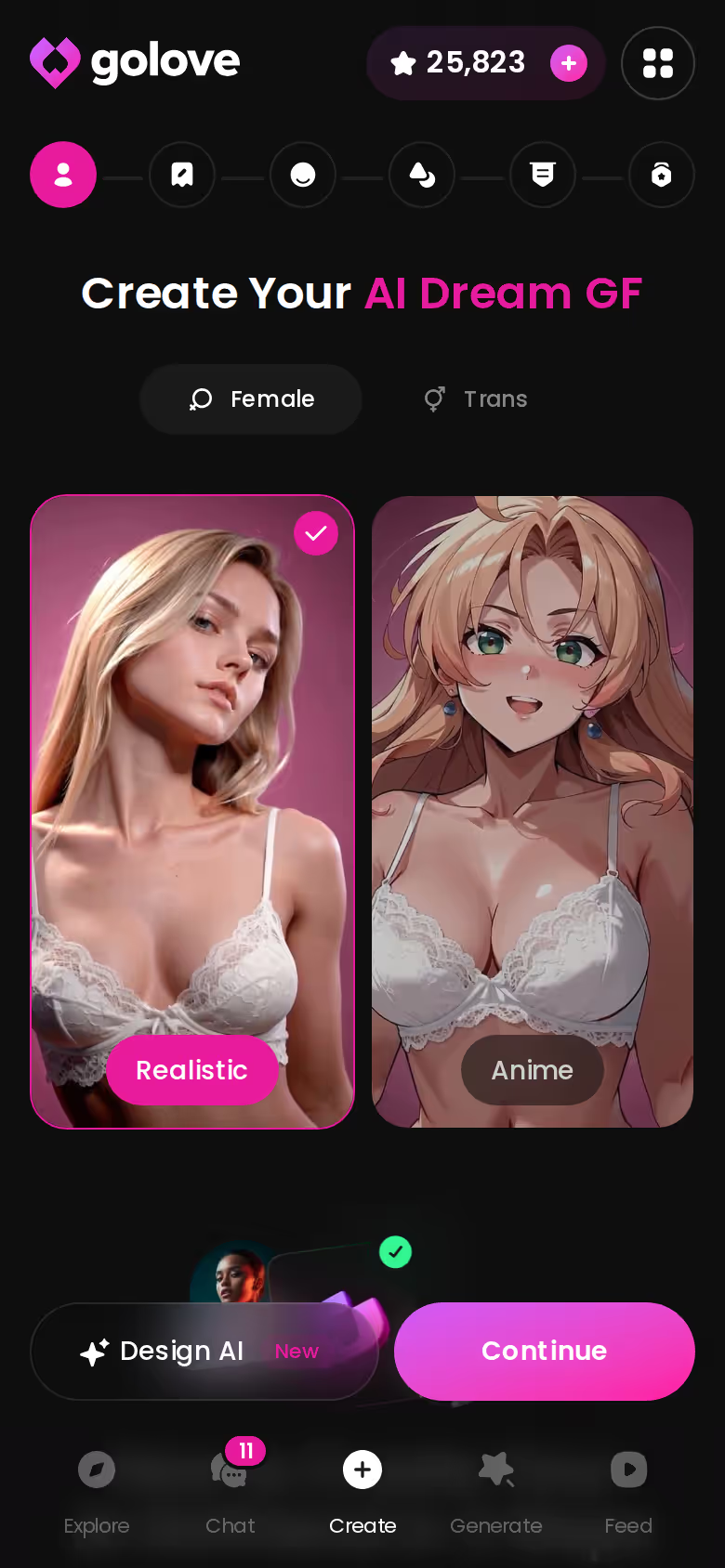
Which leaves the deeper question I keep circling: whether a companion that remembers you is something new, or just the oldest thing there is, done in software. I don't have a clean answer. I do know that building your own — picking her traits, her voice, the way she talks — is where the memory pillar starts paying off, because everything she retains is about a person you designed rather than one handed to you. Start there; my walkthrough covers each step if you want a guide beside you.
Checklist box
What good looks like, in one checklist:
- Real-time voice calls with per-character voices
- Memory across chats — she remembers your details
- In-chat image generation — 35 poses and 21 outfits
- 2 reward stars every day you log in
| What you get | GoLove.ai |
|---|---|
| Real-time voice calls | Yes — per-character voices |
| Memory across chats | Yes — remembers your details |
| In-chat image generation | Yes — 35 poses & 21 outfits |
| Daily reward stars | 2 every day |
Frequently Asked Questions
Related Articles

Dream Girl AI: Why GoLove Gets It Right
Searching for your dream girl AI? Here's what that search really means — and why GoLove.ai is the app that actually builds and remembers her.

Dream Companion AI Girlfriend: What Actually Works
Dream companion AI girlfriend, decoded — GoLove wins on voice continuity, real customization, and memory. to try, instant-access needed.

Dream Girlfriend Chat App: GoLove Changed My Mind
Searching for a dream girlfriend chat app that actually holds a conversation? I tested GoLove.ai — it goes further than you'd expect. Here's what happened.

Romantic AI Companion: Why GoLove Feels Different
What makes a romantic AI companion actually feel real? GoLove.ai's memory, voice, and character depth set it apart. Explore today.
This article contains affiliate links. We may earn a commission at no extra cost to you if you sign up through our links. See how we test.