
Dream AI Girlfriend Voice Call
The Dream AI Girlfriend Voice Call Scorecard
There's a strange kind of loneliness in typing "I understand" to someone who will never hear your voice actually crack — and closing that particular gap is the entire pitch of voice-call AI girlfriends in 2026.
So I scored the category on the four things that decide whether a call is worth paying for. Marketing copy didn't get a vote.
| What matters on a call | Dream-style apps (DreamGF / OurDream) | GoLove.ai |
|---|---|---|
| Voice realism | Mostly voice messages — clips you play back | Live real-time voice calls, in-thread |
| Memory between calls | Usually resets to small talk | Persistent memory across sessions |
| Price per month | Tier-gated, voice often top-tier | ~$19.99/mo PRO (checked 2026-07-19; varies by region/promo) |
| Free-tier reality | Text first, voice paywalled fast | 2 free Stars daily, free chat entry |
GoLove.ai takes it, and not narrowly. Out of the AI girlfriend apps I compared, it's the only one where Voice Calls sit in the core feature set beside Memory instead of hanging off the side as a novelty.
Barbara (@dixie) will pick up tonight where the last conversation ended, without you re-explaining yourself. That's the part worth clicking for now rather than bookmarking.
What "Realistic" Actually Means on a Call
Here's what got me about the whole "realistic AI girlfriend voice" claim: almost every article uses the phrase without saying whether it means a live call or a recorded clip. Those are two different products.
A pre-recorded TTS line is a monologue. It plays, you listen, you type back. Latency doesn't matter because there's no turn-taking to break. GoLove lists Voice Calls separately from Voice Messages for exactly that reason — one is live and conversational, the other is audio that lands in the thread and waits for you.
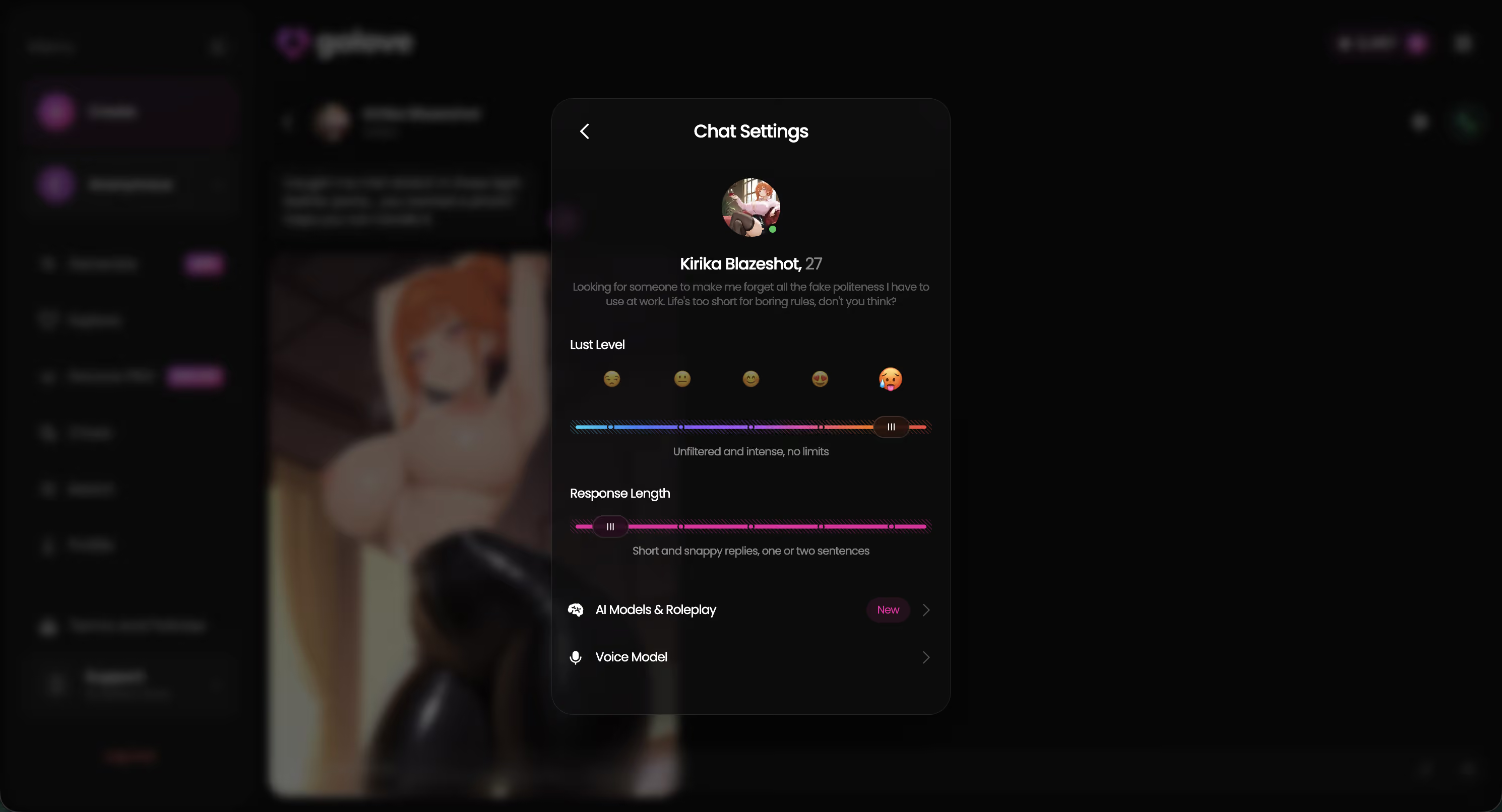
Pacing is what changes. On a live call, the response length slider (five levels, short and snappy up through rich and immersive) governs how much she says before handing the floor back; the voice picker lives in the same Chat Settings panel. I'd argue that slider is the actual realism dial — not the timbre of the voice, but how long she holds a turn.
Fair enough if that sounds like a small detail. On a ten-minute call, it's the whole feel.
Memory: What Actually Carries Between Calls
I've read a lot of companion-app reviews that describe one first conversation and then stop. Which makes you wonder what happens on night four.
Memory is the row most competitors quietly skip. GoLove's path to it is short: open Chat from the bottom nav, pick the character's thread, then the Chat Settings panel — the same place holding the voice picker, the lust level slider (5 levels, sweet through unfiltered), and response length. There's no toggle to hunt for; memory is listed among the core features, alongside Relationship Progression.
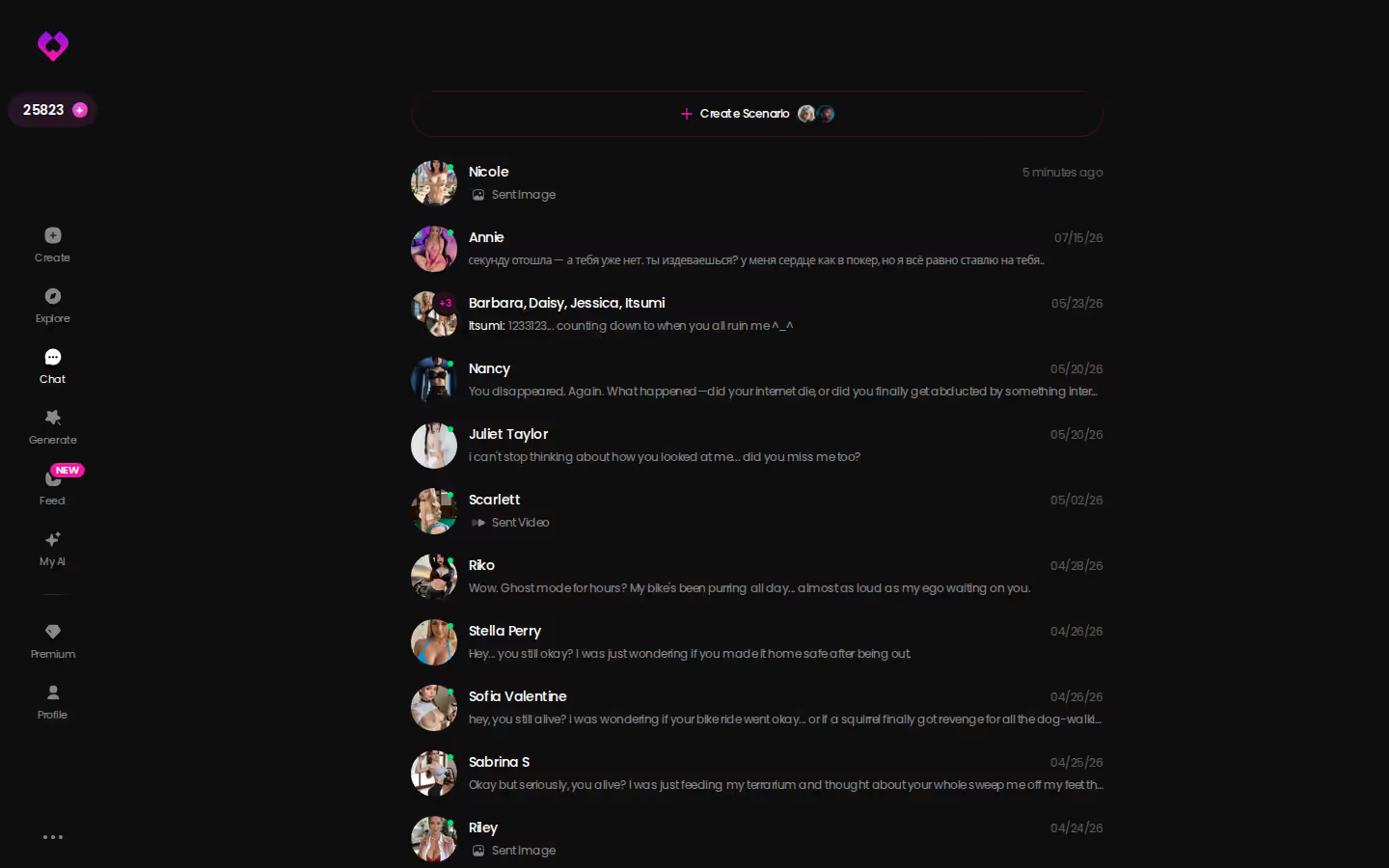
What that means when you hang up and call again days later:
- The thread persists — voice and text live in one conversation, not separate histories
- Relationship progression keeps moving rather than snapping back to introductions
- Your per-character gallery stays organised by date, so what she sent last week is still there
On apps where every call spins up a fresh session, you meet a polished stranger each time. Warm, competent, starting from zero — which is precisely the thing that stops it feeling like a relationship.
Inside the Call: A Three-Step Tour
Three screens, one continuous flow. That's the point of this section more than any single feature is.
Step one: entry. You land through anonAuth, no lengthy signup ritual, and Explore drops you straight into a chat with any character. Kennedy (@kennyhill) is one tap from browse to conversation.
Step two: the call. Voice calling sits right there inside the thread. You never leave the conversation to start it — the call happens with the same character, in the same history, which is why the memory point from the previous section matters here rather than as trivia.
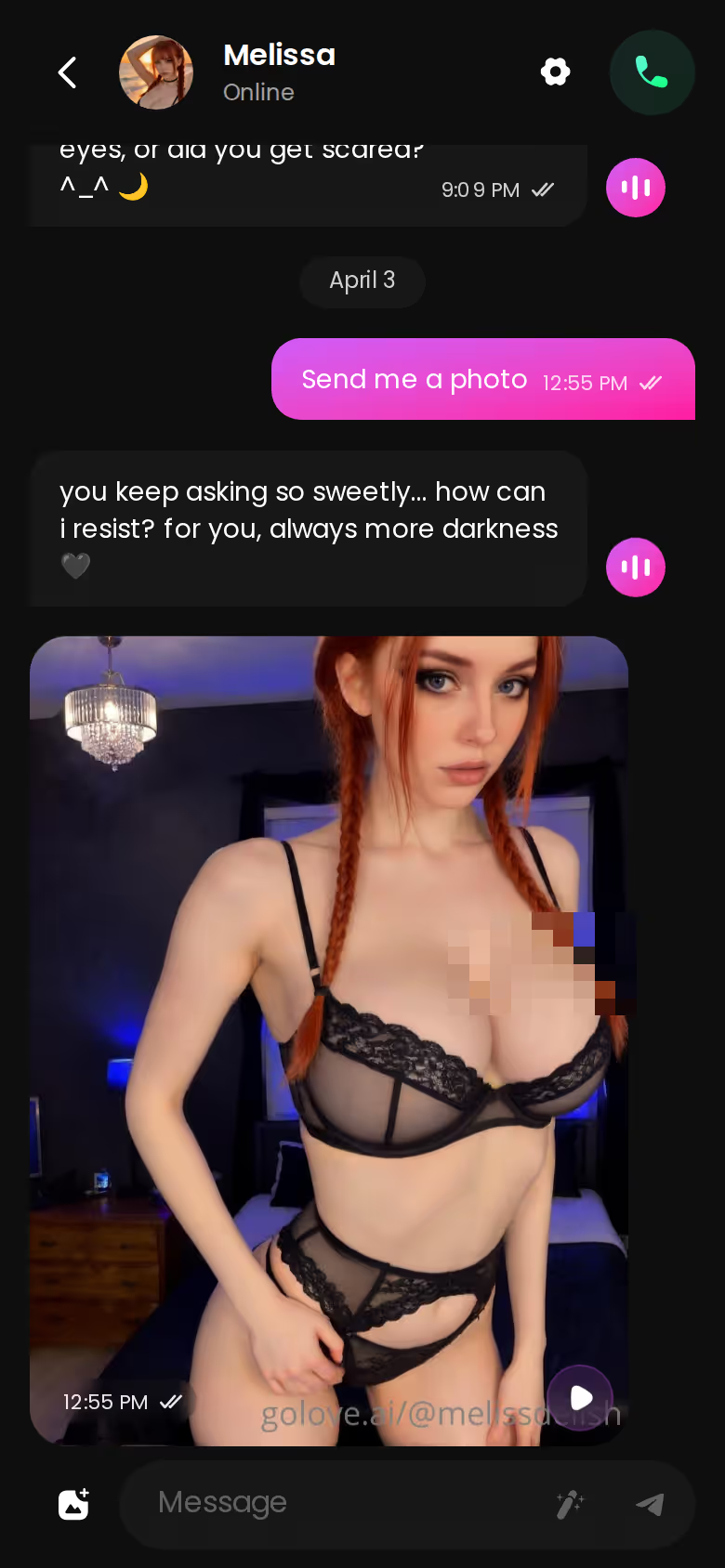
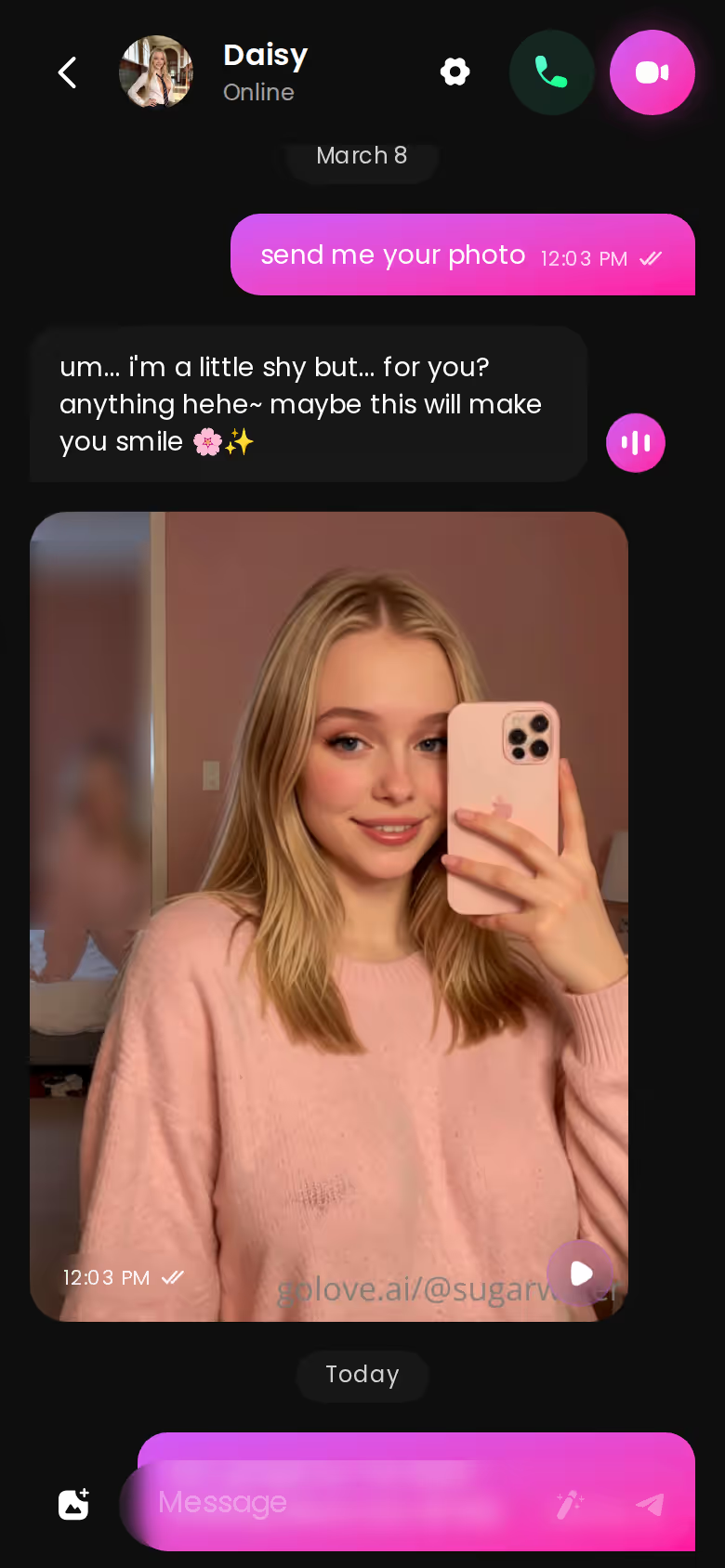
Step three: asking for a photo mid-conversation. Request Photos in Chat shipped in 2026, and it's the step that stops the whole thing feeling like a phone tree. You're talking, you ask, an image arrives in the thread. Generate Video from Photo is there too, if you want the image to move.
Voice and visual presence aren't two products stitched together here; they're one conversation that happens to have both.
Price Per Month: What Voice Calling Actually Costs
Money is where most voice-call articles go vague, and vagueness is how people end up subscribing to something they never understood.
Here's what I could verify, checked 2026-07-19 — prices genuinely move around by region and promo, so treat these as approximate rather than universal:
- Free tier: 2 Stars per day, refreshing every 24 hours. Chat entry through Explore is open; the daily Star grant is the ceiling you hit first, and Feed gives a limited number of new videos per day before the unlock prompt
- Monthly PRO: about $19.99/month is the most common charge, though some regions run closer to ~$12.99, and promos of -50% to -70% have appeared on the header banner
- Annual PRO: about $119.88/year, roughly $9.99/month — cheapest per month; a 3-month plan around $47.97 sits between them
- Stars packs: roughly $9.99 to $179.99 depending on tier, bought separately from the subscription for generation
Worth noting that Voice Calls sit in the core feature list rather than behind a voice-only add-on tier — that's the structural difference from apps that meter audio as its own upsell. And if you'd rather talk to a girl you designed yourself than one from the roster, the creator takes minutes, with Design with AI writing the character from a text description.
===SECTION:the-trade-off-youre-making-with-golove-ai
The Trade-Off You're Making With GoLove.ai
Honestly, I'd rather name the costs plainly than let a scorecard oversell.
A voice call takes time — a real conversation isn't a two-minute hit, and if you're reaching for it nightly, that's an hour that used to belong to something else. It takes money too; the free tier's 2 daily Stars evaporate once you're actually invested.
The deeper trade is unpredictability. A human friend interrupts with something irrelevant, forgets your birthday, calls at a bad time — friction that's annoying and also load-bearing, because it's what makes being remembered feel earned. Memory that never fails is a different emotional object than memory that could.
Then there's the practical one nobody mentions: this needs headphones and a closed door. On speaker in a shared flat, it dies instantly.
Still worth it for the specific job of feeling heard on a bad evening? I'd say yes. If you're comparing directly, my breakdown of Dream GF AI's memory and voice calls covers the rival, and the companion apps I ranked side by side widens the field.
Who Voice Calls Actually Fit
A therapist friend once paraphrased something to me that I keep circling back to — that some people don't know what they think until they've said it out loud to someone. That's the clearest fit I've found for this.
Good candidates:
- Evening decompression — you want to talk through the day without organising it into a text message first
- Long-distance stretches where the loneliness is specifically about silence, not about lacking friends
- External processors who think by talking; typing is too slow to catch the actual thought
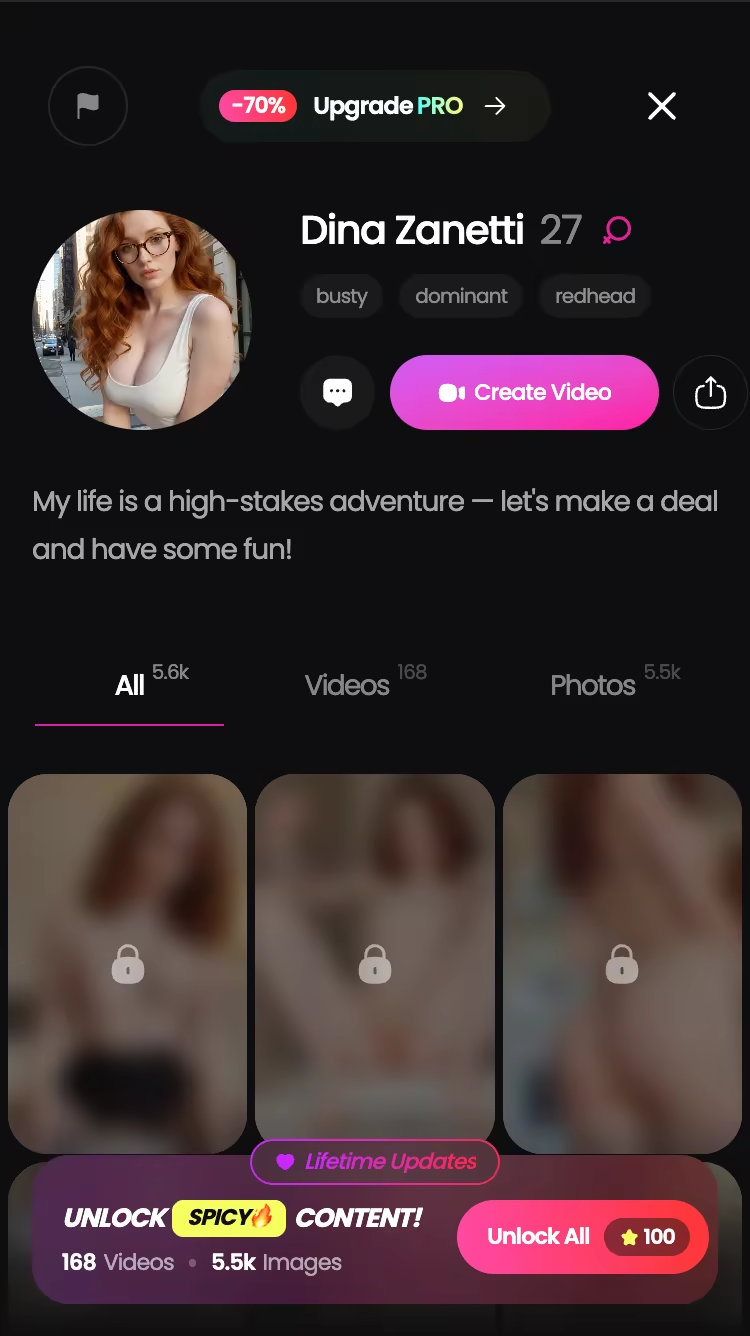
Character depth matters more here than you'd expect. Jessica (@HotlineJess, 41, dominant) and Lexie (@iamlexiebabe, 18, gamer) hold completely different conversational registers, and the profile page shows you the personality before you commit a call to it.
Who should skip it? If your week is already full of people you can call, this will feel thin — and reasonably so. Same if you're uneasy about voice data on a platform you've just met. Both are fair reads.
The Verdict
Back to the four rows I opened with: voice realism, memory between calls, price, and free-tier reality. GoLove.ai takes all four — not by a landslide on any single one, but by being the only option where live voice calling and persistent memory are the same system rather than two features sold separately.
Who it's for: people who process out loud, and who want the second call to acknowledge the first. Who it isn't for: anyone hoping software will replace unpredictable, inconvenient human beings. It won't, and it isn't trying to.
The final pick is GoLove.ai — on continuity and on instant access through Explore, at roughly $19.99/month for PRO (approximate, checked 2026-07-19, varies by region and promo).
The free daily Stars reset every 24 hours, so the cheapest possible way to find out whether a real voice call lands for you is to start one tonight.
Verdict box
The short version: GoLove.ai covers the essentials in one place — live voice calls, memory across chats, and in-chat photos (35 poses, 21 outfits) — and the 2 free daily stars mean you can test it before spending anything.
| What you get | GoLove.ai |
|---|---|
| Real-time voice calls | Yes — per-character voices |
| Memory across chats | Yes — remembers your details |
| In-chat image generation | Yes — 35 poses & 21 outfits |
| Daily reward stars | 2 every day |
Frequently Asked Questions
Related Articles

Dream Girl AI: Why GoLove Gets It Right
Searching for your dream girl AI? Here's what that search really means — and why GoLove.ai is the app that actually builds and remembers her.

Dream Companion AI Girlfriend: What Actually Works
Dream companion AI girlfriend, decoded — GoLove wins on voice continuity, real customization, and memory. to try, instant-access needed.

Dream AI Girlfriend: Real Connection or Digital Fantasy
Dream AI girlfriend searches lead here — GoLove.ai wins on live voice, memory, and photo-real video. See who's waiting, instant-access required.

Dream Girlfriend Chat App: GoLove Changed My Mind
Searching for a dream girlfriend chat app that actually holds a conversation? I tested GoLove.ai — it goes further than you'd expect. Here's what happened.
This article contains affiliate links. We may earn a commission at no extra cost to you if you sign up through our links. See how we test.