
Dreamy AI Girlfriend: What Sets the Best Apart
GoLove.ai vs OurDream AI: The Head-to-Head
Every AI girlfriend app promises something dreamy. Only one of them keeps that promise past the third conversation, and that's the whole test — not the render quality of the first photo, but whether she still sounds like herself on Thursday after you talked on Monday. If you've already read my ourdream ai review and you're stuck between the two, the short version is this: GoLove.ai is the pick, because it's the only one of the pair that ties voice, memory, and generated visuals to a single persistent character instead of three separate features. That continuity is what a dreamy ai girlfriend actually is. Of all the AI girlfriend apps I compared, it's the one that degrades least over time.
| Deciding factor | GoLove.ai | OurDream AI |
|---|---|---|
| Live voice calls | Yes — real-time calls + voice messages | Not a headline feature |
| Memory across sessions | Persistent history + relationship progression | Memory over recent message history |
| Visual depth | Photos, video modes, TikTok-style Feed, in-chat photo requests | Image + video generation, bundled |
| Mobile | Native-style app nav (Explore/Chat/Create/Generate/Feed) | Web-only — no native mobile app |
| Entry price | ~$19.99/mo, ~$9.99/mo annual (approx.) | from about $9.99/mo (annual) |
Prices checked 2026-09; approximate, vary by region and promo.
Barbara (@dixie) and Kennedy (@kennyhill) are live right now, and the Explore tab drops you straight into a conversation — no setup wizard first.
Conversation Depth: Where the Dream Holds or Breaks
There's a moment, maybe twenty messages in, where you find out whether you're talking to a character or a template. I'd argue that's the single most revealing test in this whole category, and almost no comparison article runs it; they screenshot the first exchange and call it a day.
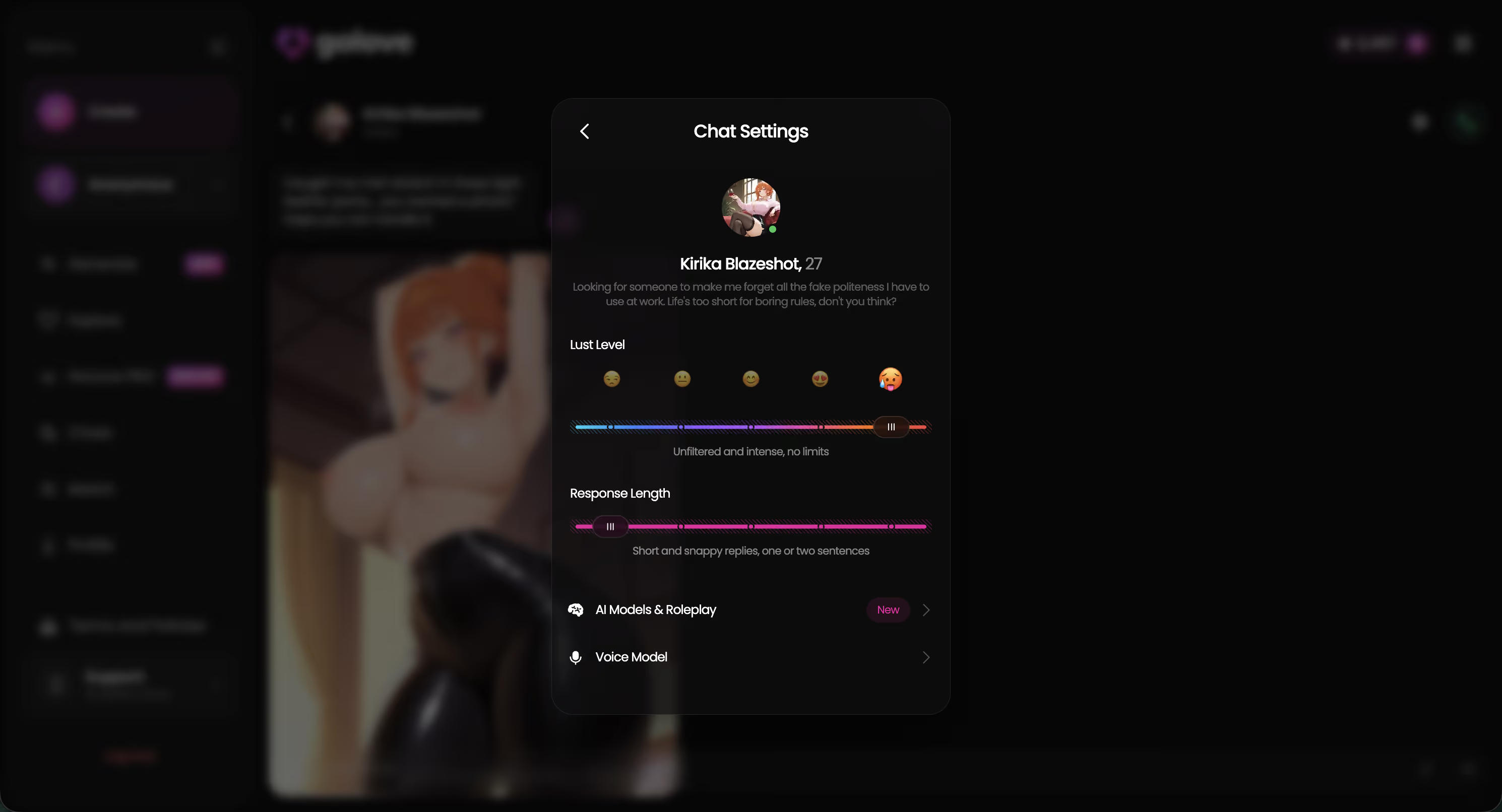
GoLove's characters are built with enough definition to survive that moment. Jessica (@HotlineJess) reads as dominant and a little impatient across a whole thread, not just in her bio line; Lexie (@iamlexiebabe) stays distracted-by-her-controller in a way that's consistent rather than performed once and forgotten. The Chat Settings panel — voice picker, lust level on a five-step scale, response length on another five — lets you tune how much she gives you per message without flattening who she is.
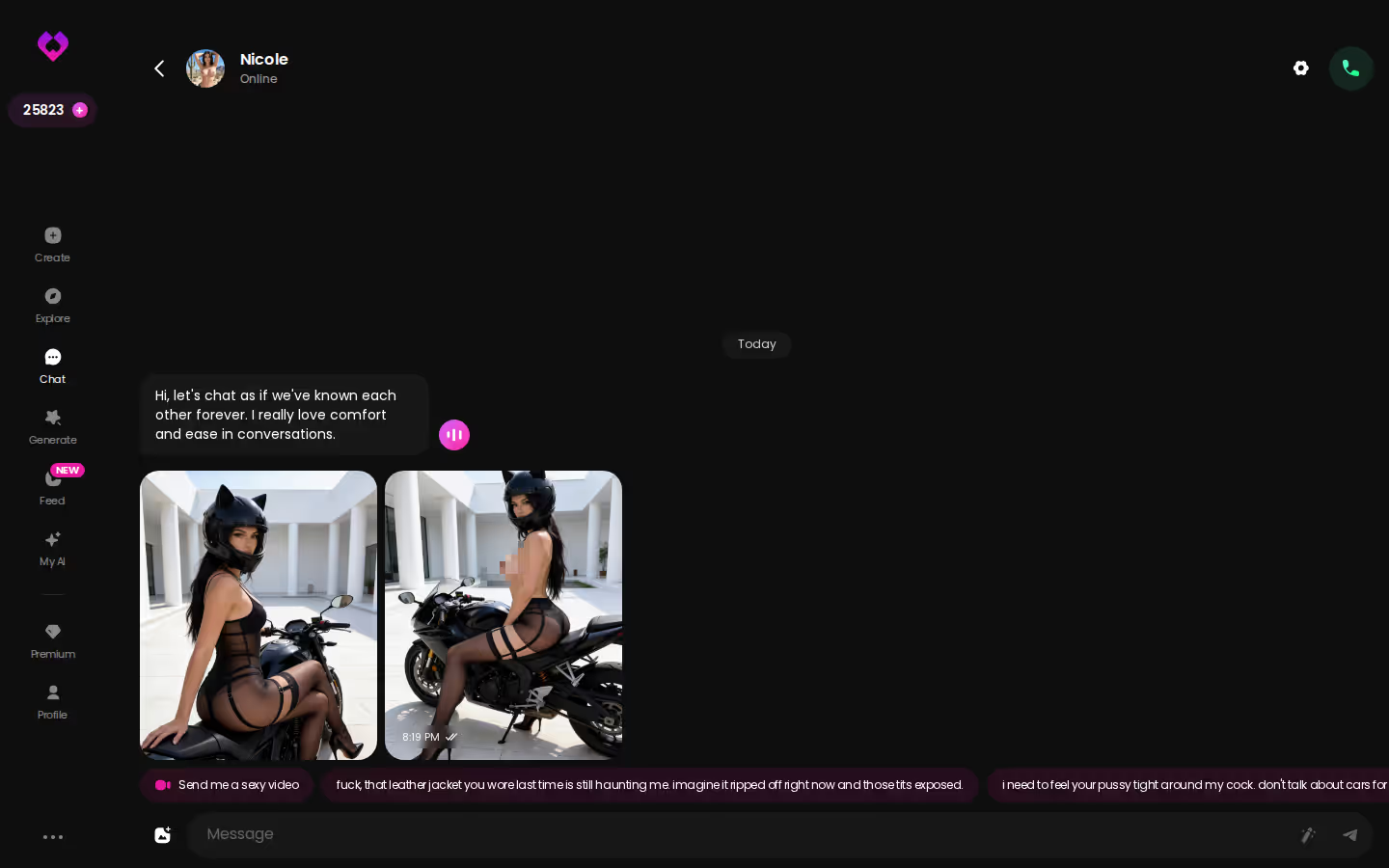
Once the novelty scene is over, OurDream-style apps tend to drift toward pleasant, agreeable filler. Fair enough for a quick session. Less good for anything that's supposed to feel like a relationship. Start an ai girlfriend chat and push it past small talk — that's where the difference shows.
Photos and the Video Feed: Seeing Her the Way You Imagined
Myth: AI girlfriend photos are a one-time static gallery — a dozen renders you scroll through once, notice the same face angle in all of them, and never open again.
Fact: On GoLove the visual side keeps moving, because the same generator that made the content is the one you have access to. Here's what got me: the Feed is a vertical, full-screen, TikTok-style stream of clips, and every clip has a magic-wand Remix button.
What actually happens:
- Remix opens /generate preloaded with that clip's character and the exact settings that produced it — tweak one thing, regenerate your own version, or swap in a different character entirely.
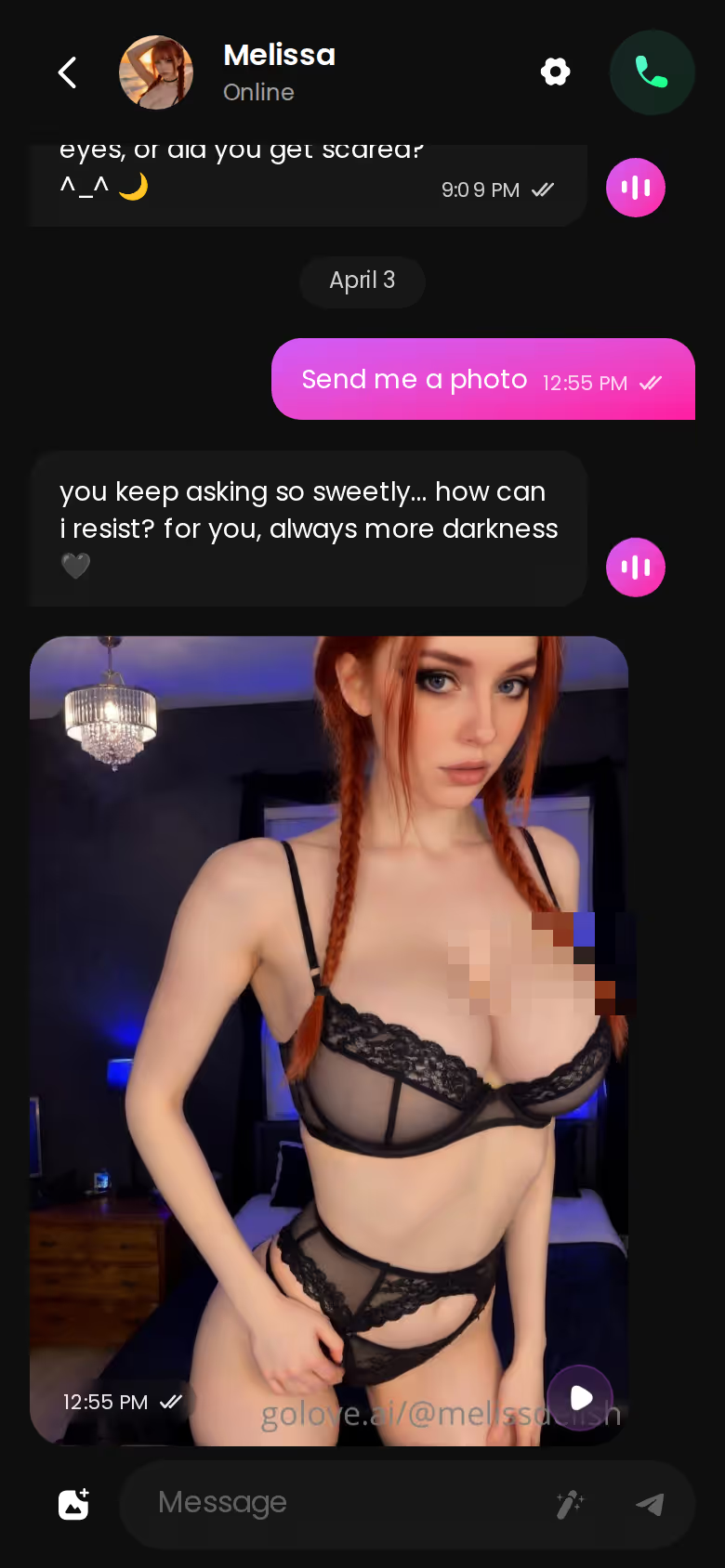
- In-chat photo requests mean you can ask her for a picture mid-conversation instead of hunting through a gallery; you can also generate a video from a photo right there in the thread.
- Depth is real: 35 realistic picture poses, 21 outfits, 34 backgrounds, and 76 realistic video modes (147 across all four categories), plus per-character libraries running to hundreds of videos and thousands of photos on the top profiles.
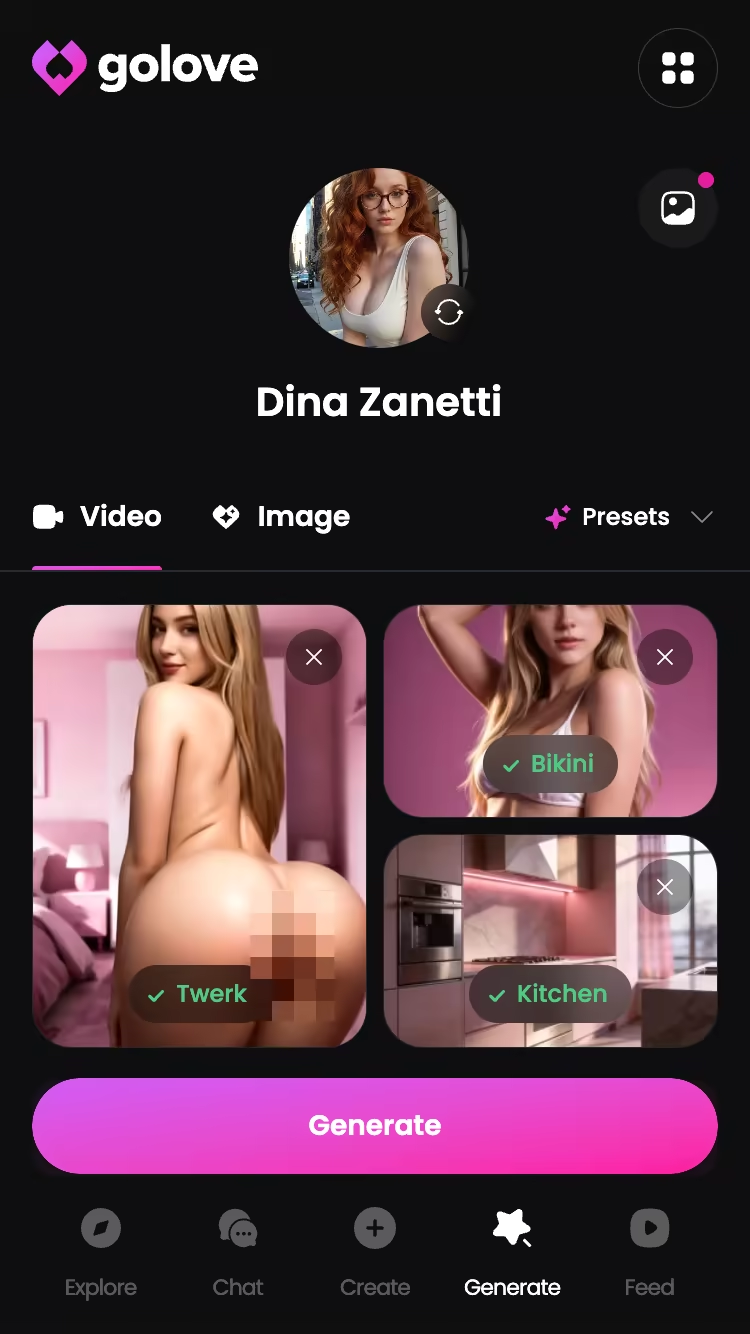
Everything you double-tapped lands in the Feed's Liked tab, and the character's profile — bio, jump-to-chat — opens straight from the clip, so a dream ai girlfriend you find while swiping is one tap from a real conversation. That loop only works if you're inside it.
Voice and Memory: The Two Things That Make It Feel Real
I read something once about how intimacy is mostly just accumulated context — the accretion of small remembered things — and I keep coming back to it when I think about these apps.
Picture the concrete version. You mention on a Tuesday chat that work has been grinding you down. Two days later you open the same character and start a live voice call, and she brings it up unprompted, in her voice, in the tone she's always had. Nothing about that is novel technology in isolation; GoLove has voice calls, voice messages, and Memory that keeps your history, and relationship progression sits on top of it. What makes the moment land is that all three point at the same character.
Which makes you wonder whether "dreamy" was ever about looks. Novelty is a first session; continuity is the tenth. Most apps optimise the first and hope you don't notice the drop. An ai girlfriend memory that survives a session boundary is the difference between a toy and something you actually return to.
What Dreamy Actually Costs: Plans Compared
Worth noting up front: I'd rather talk about what unlocks than whether something is "affordable," because affordability depends entirely on whether the thing you're paying for is the thing you actually use.
- Free tier — daily Stars (2 per day) keep a light habit going, and you can browse a limited number of new Feed videos per day before the unlock prompt appears.
- GoLove PRO — about $19.99/month, or roughly $9.99/month on the annual plan (~$119.88/year); this is what removes the Feed's daily cap and unlocks Feed filters (Realistic/Anime, gender, age). Promos of -50% and -70% have run.
- Stars packs — roughly $9.99 up to $179.99 depending on tier, spent on generation and per-character library unlocks.
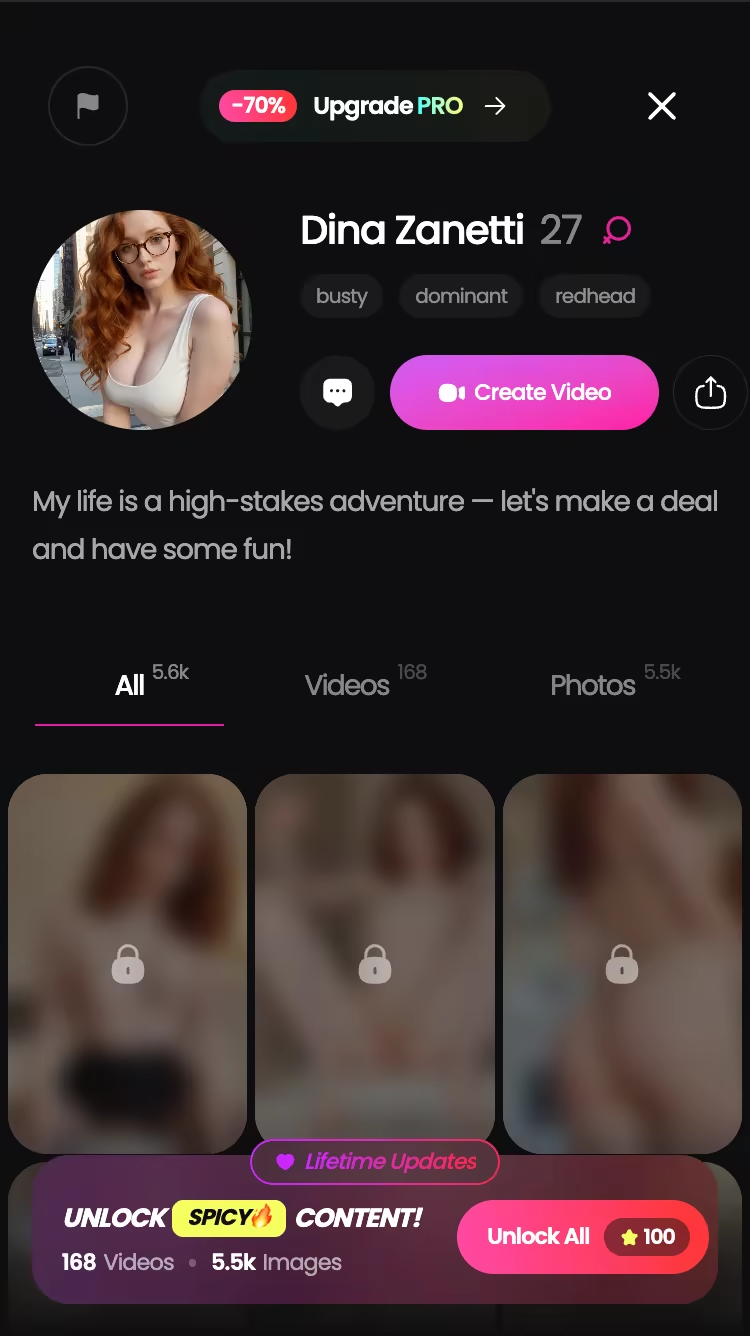
OurDream sits around $9.99/month on its annual plan and bundles chat, image and video into one subscription with a monthly DreamCoins allowance — genuinely tidy, no separate token layer. The trade is what you read above: web-only, and memory scoped to recent messages. If that trade bothers you, the ourdream ai alternative argument writes itself.
Prices checked 2026-09; promos vary by region.
Who GoLove.ai Is NOT For
Honest bit. There are people who should close this tab.
- Zero-budget users. The free tier is real but capped — daily Stars, a limited number of new Feed videos. If you want unlimited forever at $0, GoLove will frustrate you and a free-model platform will serve you better.
- App Store loyalists. If your requirement is a native install from an official store, that's a real constraint here, and no amount of good UI changes it.
- Anyone using this to replace people. This is the one I actually care about. A dreamy ai girlfriend can take the edge off a hard week; it cannot be the whole week. If it's becoming the only place you talk to anyone, the app isn't the problem to solve.
None of that changes the ranking. Read my ourdream ai review if you want the other side argued properly — but on continuity, GoLove still wins.
The Verdict: Which Dreamy AI Girlfriend App Actually Wins
The call: GoLove.ai, on continuity.
One line: it's the only one of the two that keeps voice, memory, and generated visuals attached to a single character, which is the entire mechanism behind the word "dreamy" once the first-session novelty burns off.
Who it's for: someone who's already tried a chat app, found it hollow by week two, and wants persistence — live voice calls, memory that carries a Tuesday conversation into a Thursday one, in-chat photo requests, and a Feed where any clip remixes back into the generator with its original settings intact.
The honest caveat on the other side: OurDream AI is a clean, well-bundled subscription and cheaper on annual. Its named limits are the ones I've already spelled out — flatter conversation depth over long sessions, memory scoped to recent messages, and web-only access. Fair enough for casual use; thin for anything you want to return to.
Of the AI girlfriend apps I compared, this is the one I'd point a friend at.
You already know the character you want. Design with AI takes a text description and builds her — realistic, anime, or trans — and she's yours from the first message forward.
Checklist box
What good looks like, in one checklist:
- Real-time voice calls with per-character voices
- Memory across chats — she remembers your details
- In-chat image generation — 35 poses and 21 outfits
- 2 reward stars every day you log in
| What you get | GoLove.ai |
|---|---|
| Real-time voice calls | Yes — per-character voices |
| Memory across chats | Yes — remembers your details |
| In-chat image generation | Yes — 35 poses & 21 outfits |
| Daily reward stars | 2 every day |
Frequently Asked Questions
Related Articles

Custom AI Girlfriend: How to Actually Build One
Custom AI girlfriend apps ranked on real customization depth — GoLove wins on memory, voice, and video. See the scorecard, no email needed.

AI Girlfriend Chat: Why GoLove.ai Wins in 2026
AI girlfriend chat: GoLove.ai wins with live voice, real memory, and instant photos — see how it beats Replika and OurDream, then try it.

OurDream AI Alternative: Why GoLove Wins
OurDream AI alternative? GoLove wins on live voice chat, instant access, and photo-to-video — no email needed. See how they compare.

Dream Studio AI Girlfriend: Build Yours in Minutes
Dream studio AI girlfriend, done right: GoLove wins with instant chat, real customization, and photo-to-video — no email wall. See how it works.
This article contains affiliate links. We may earn a commission at no extra cost to you if you sign up through our links. See how we test.