
OurDream AI Review 2026: Honest 30-Day Test
OurDream AI vs GoLove.ai: The 2026 Scorecard
I spent more time than I'd like to admit toggling between OurDream AI and GoLove.ai, waiting for the moment where one of them clearly pulled ahead. It came. It wasn't subtle.
| What buyers actually check | OurDream AI | GoLove.ai |
|---|---|---|
| Chat realism | Strong — chat-first product | Strong, plus 5-level lust + response-length sliders |
| Memory / continuity | Memory over recent message history | Persistent memory + relationship progression + per-character gallery |
| Photo generation | Bundled in subscription | 35 realistic poses, 21 outfits, 34 backgrounds, batches of 2/4/8 |
| Video | Bundled video generation | 147 video modes total (76 realistic) + photo-to-video in chat |
| Voice | Not the headline feature | Live voice calls + voice messages |
| Entry price | ~$9.99/mo on annual | PRO ~$9.99/mo on annual (~$119.88/yr) |
| Mobile | Web-only, no native app | Mobile app with Feed + Generate tabs |
Prices checked 2026-08; promos vary.
Honestly, on price these two land in the same neighbourhood. The separation happens everywhere else.
Why GoLove.ai Wins the Continuity Question
What quietly ruins an AI girlfriend app isn't bad writing; it's discontinuity. You spend a week building something with a character, and then she forgets the shape of it — or the photo she "sends" you shows a woman you've never met. OurDream carries memory over recent message history, which serves a conversation well enough and thins out badly across weeks.
Three things stack up on the GoLove side where OurDream has one: Memory that holds the history, Relationship Progression that moves the tone forward, and a per-character Gallery organised by date, so every photo you've generated with her stays attached to her. Same face, same thread, same archive.
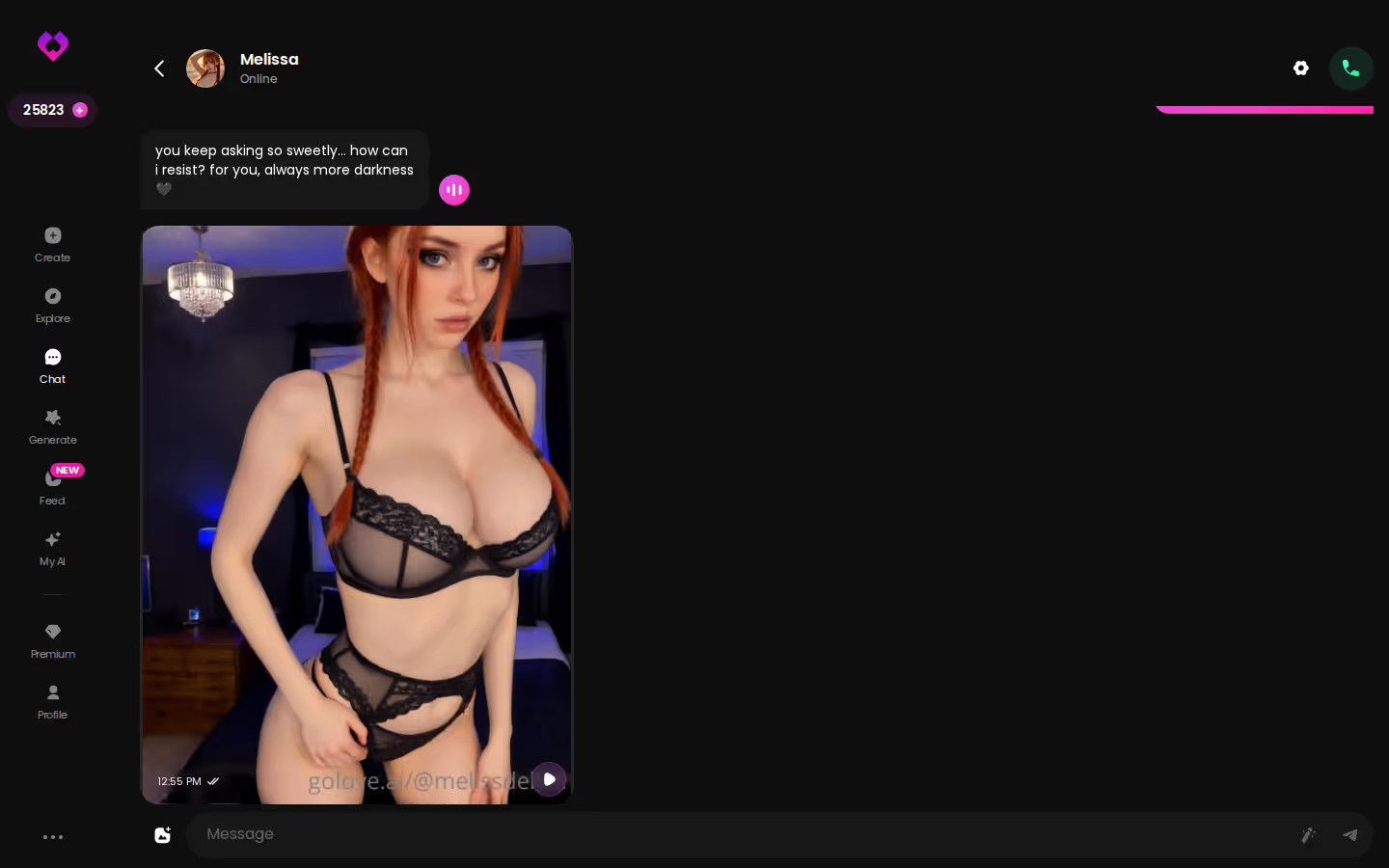
That gallery is the proof — it's why a character you started with in March still looks and sounds like herself in August. If continuity is the thing you're actually paying for, start with a character who already has a library behind her.
What Each App Actually Costs in 2026
Pricing is where most reviews of this category go stale, so here's the state of it as far as I could verify.
OurDream AI runs from about $9.99/month on the annual plan, and its genuine structural advantage is that chat, images and video sit inside one subscription with a monthly DreamCoins allowance — no separate token layer bolted on top. Compare that to Candy AI, where image and media generation burn tokens above the subscription and real spend runs well past the ~$9.99 entry.
GoLove PRO lands in roughly the same place: about $19.99/month monthly, or about $119.88/year — roughly $9.99/month annualised. Regional variance is real (as low as ~$12.99 in some markets), and promo banners of -50% and -70% have both appeared. Star packs for generation sit separately, running about $9.99 to $179.99 depending on tier.
Where the free tiers bite:
- GoLove hands you 2 free Stars daily, which keeps you sampling but not producing at volume.
- The Feed gives a limited number of new videos per day before the unlimited paywall appears; filters are PRO-only.
- OurDream's free tier is unverified — check their site before assuming one exists.
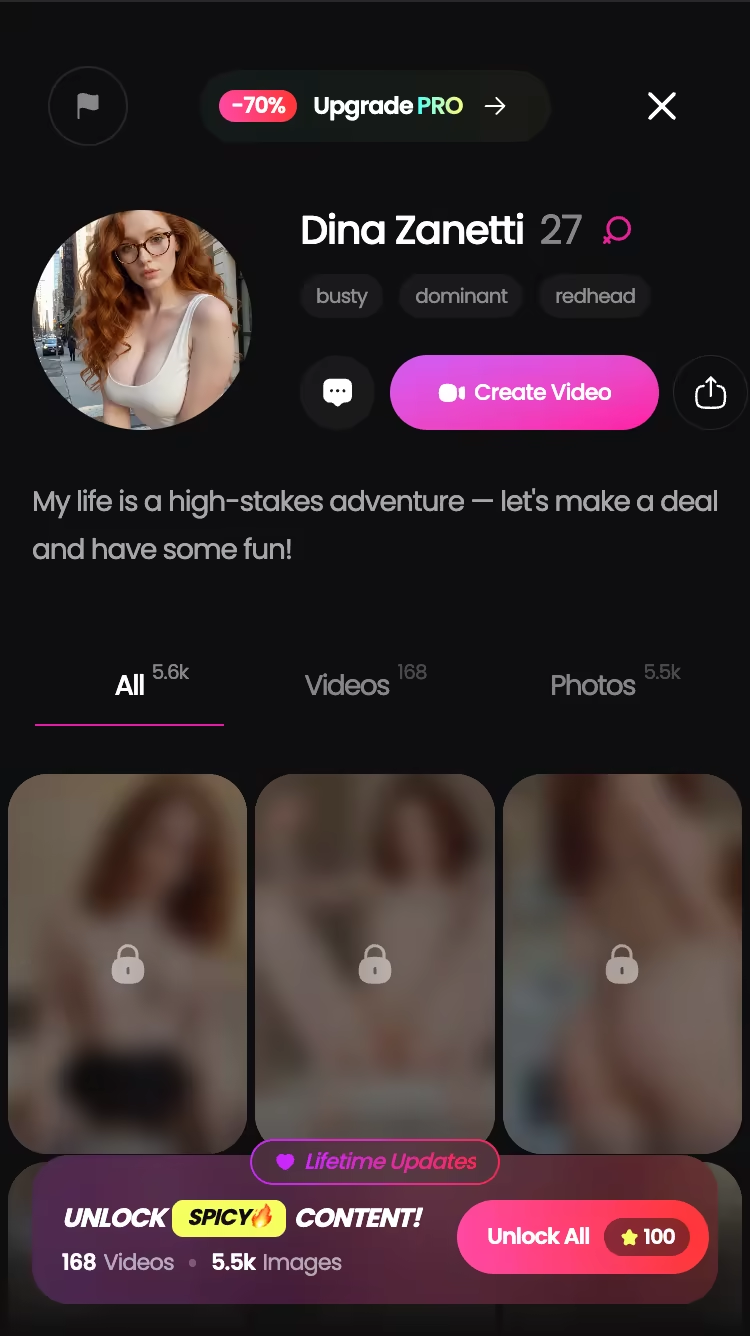
Prices checked 2026-08; promos vary by region.
Building a Character and Asking for a Photo: A Walkthrough
There's a particular hesitation that hits right before you make a character. You're being asked to describe what you want, plainly, and most people find that harder than browsing. GoLove softens it with anonymous entry: you're in and chatting before you've committed to anything.
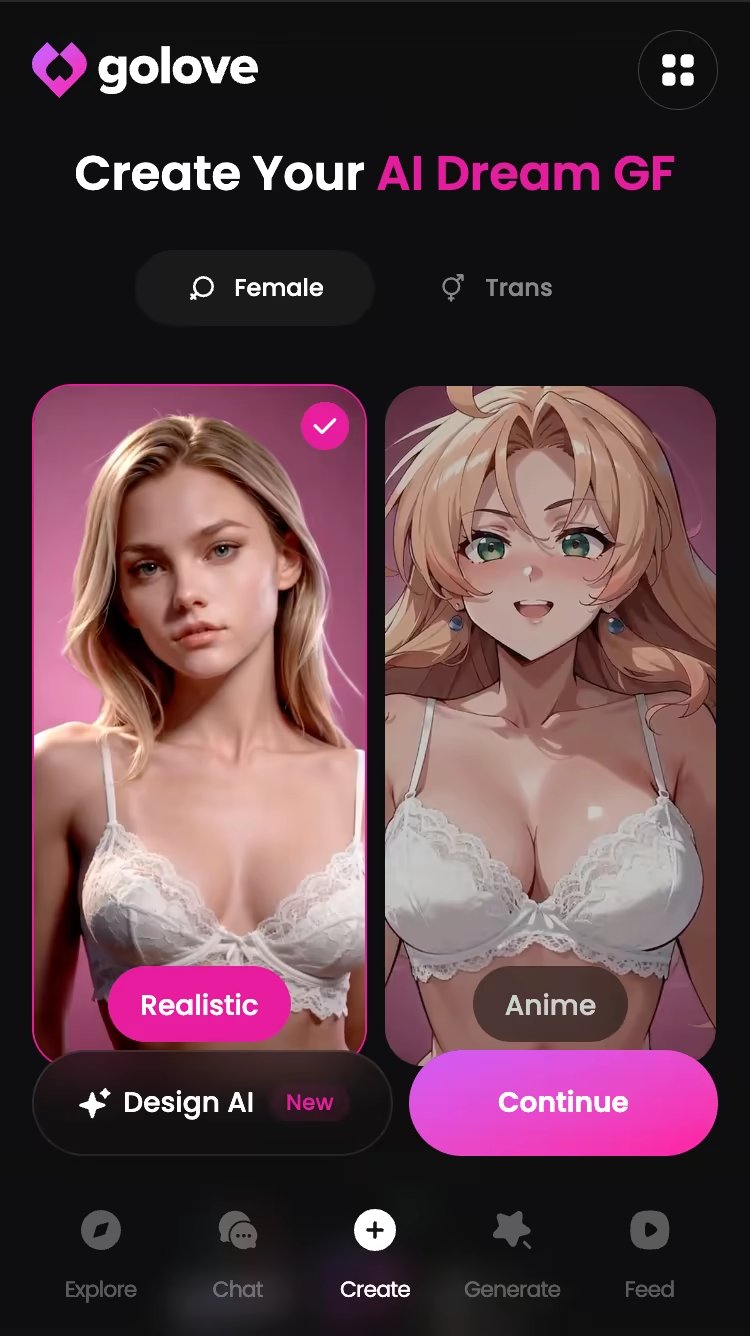
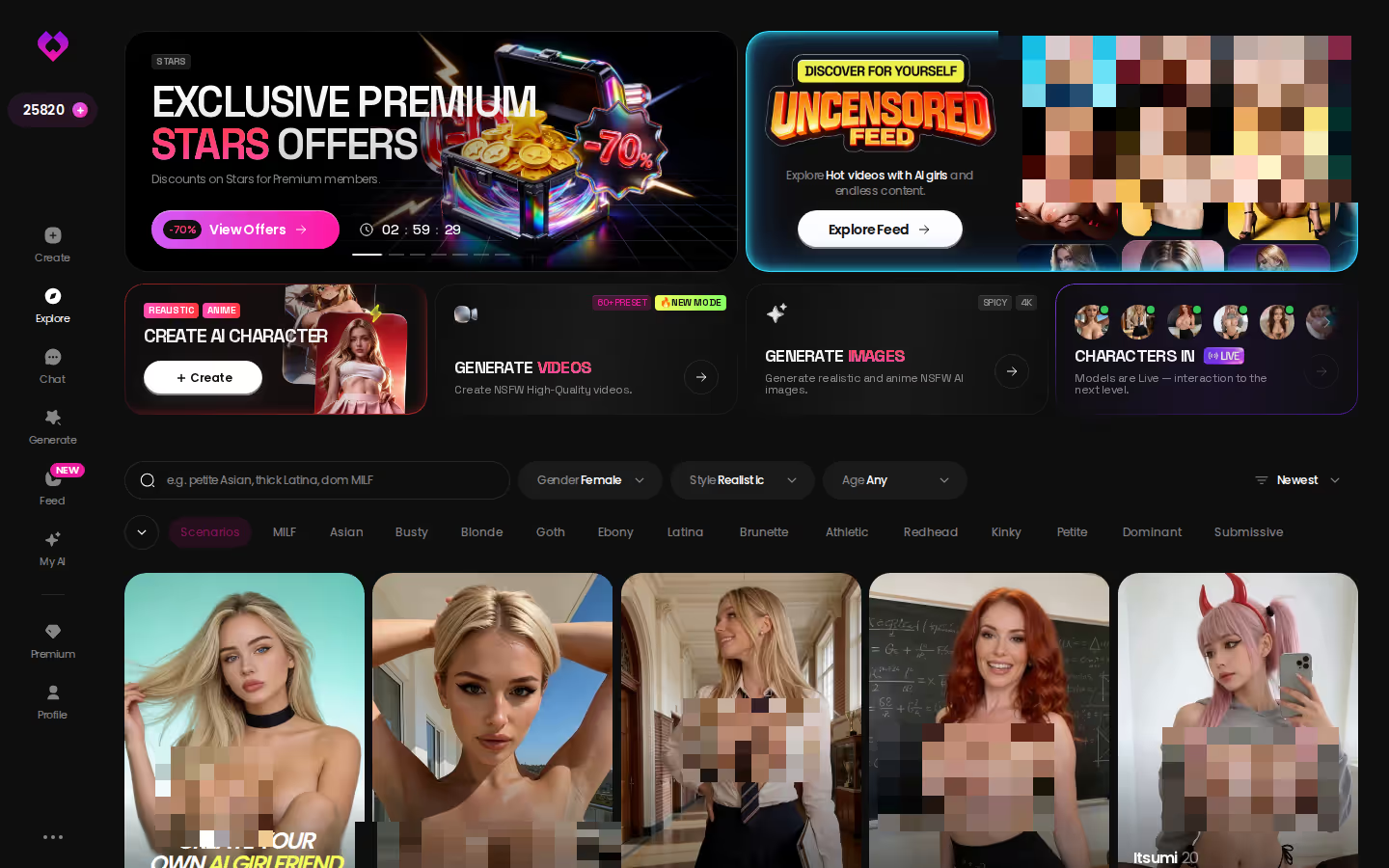
The Create flow offers three categories — Realistic, Anime, and Trans — plus "Design with AI," where you describe a concept in plain text and the system builds the character from it. That last one is the escape hatch for anyone who freezes at a panel of sliders. From there, Chat Settings let you set voice, lust level (1 sweet through 5 unfiltered) and response length (1 short through 5 immersive) before the first message lands.
Then comes the part that matters. You request a photo in the chat itself, and it arrives in the thread; if you want it moving, Generate Video from Photo turns that same image into a clip without you leaving the conversation. Same character, same face, no re-finding her — which is exactly the loop building your own AI girlfriend is supposed to feel like.
The Feed Changes What 'Winning' Even Means Here
I keep coming back to a line I read somewhere about interfaces teaching you what to want. The Feed is that idea applied here, and OurDream has no equivalent to hold it up against.
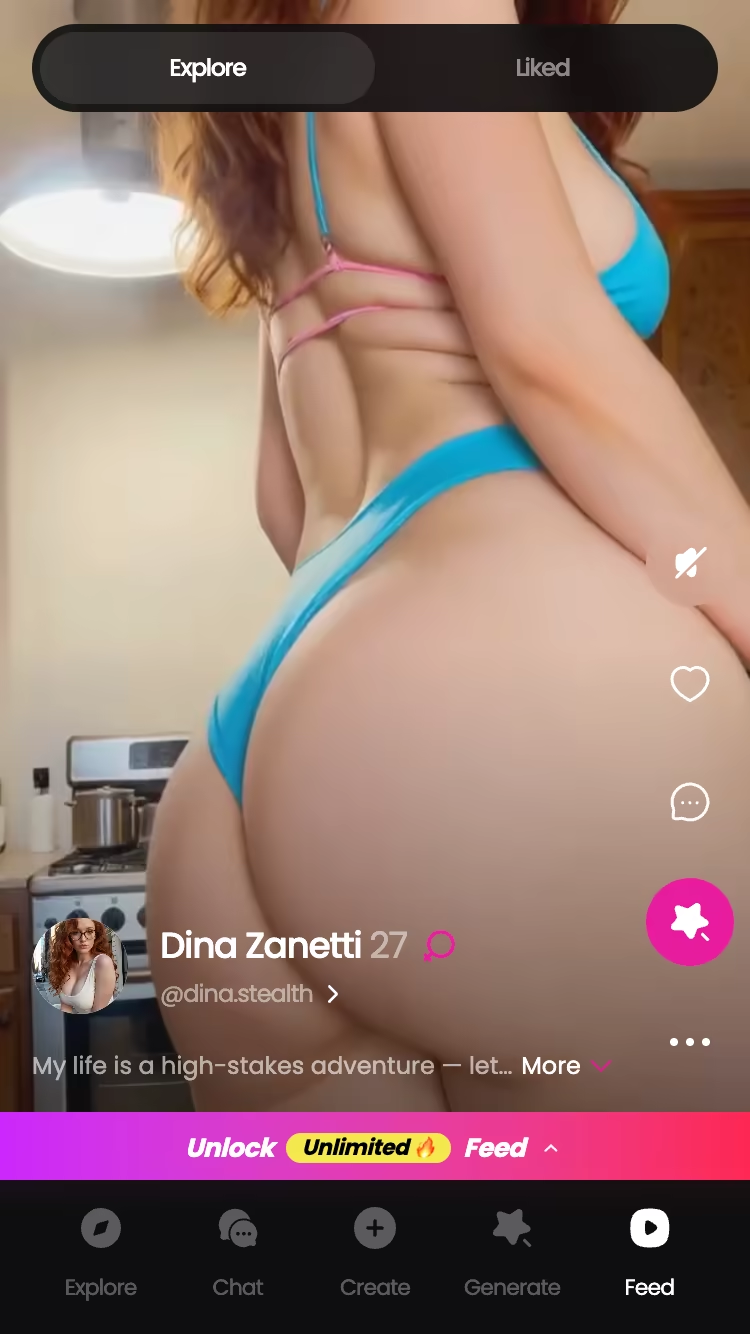
It's a vertical, full-screen clip feed — swipe up on mobile, wheel or arrows on desktop — with Explore and Liked tabs. Double-tap saves a clip to Liked, rewatchable whenever. Fair enough so far; TikTok taught everyone this grammar years ago.
Here's what got me: the Remix button. Tap the magic wand on any clip and the generator opens preloaded with that clip's character and the exact settings that produced it. Tweak one preset and regenerate your own version, or swap in a completely different character. The feed isn't a showroom running on some privileged internal tool — it's the same generator sitting behind every account.
Which makes you wonder what "reviewing a chat app" even means when the product's centre of gravity has moved to video.
The Trade-Off You're Making With GoLove.ai
I'd argue every product recommendation is really a statement about what you're willing to give up.
GoLove spreads itself across chat, voice, images, video, a feed, a creator economy and a generator. OurDream is narrower by design — a chat-and-generation product, web-only, with a steeper custom character builder that rewards people who genuinely want to sit and configure. If your ideal evening is three hours of dense, uninterrupted long-form roleplay and nothing else, a chat specialist spends all of its attention on exactly that, while GoLove is also spending attention on 147 video modes and an infinite feed.
That's a real cost, and I won't pretend otherwise. I still think it's the right trade for most people, because what breaks immersion isn't slightly less literary prose; it's the character who forgets you, or who looks like a stranger in her own photos. GoLove solves the second problem better.
Where OurDream AI Still Has an Edge
Worth noting, because the balanced version of this review is the only useful one:
- Simplicity. One subscription bundling chat, images and video with a DreamCoins allowance means fewer decisions than GoLove's PRO-plus-Stars split. Some people just want a single line on the card statement.
- Focus. OurDream's builder has a steeper setup curve, and for a certain kind of user that's a feature — you're being asked to define the character properly rather than pick from presets.
- Fewer distractions. No feed, no creator marketplace, no video mode grid. If you came for the conversation, nothing pulls you sideways.
The counterweight: OurDream is web-only with no native mobile app, and that matters more than it sounds when the interaction is meant to feel casual and frequent.
The Recommended Pick
Verdict: GoLove.ai, 4.5/5 — OurDream AI, 3.5/5. Both are competent, similarly priced products; GoLove wins on continuity, which is the row that actually decides whether you're still paying in month three.
Who each is for: OurDream suits the reader who wants one bundled subscription, a deep configuration curve and pure chat, and doesn't care about mobile. GoLove suits the reader who wants the character to persist — same face across a dated gallery, memory that carries, voice calls, in-chat photo requests, and photo-to-video without leaving the thread. That's the gap the opening scorecard showed, and 30 days of poking at both didn't close it.
If you want the wider field before committing, the AI companion apps I compared side by side covers the rest of the category.
Start with a character — Barbara (@dixie) and Lexie (@iamlexiebabe) both have real libraries behind them — and 2 free Stars a day is enough to test the memory claim before you spend anything.
Verdict box
The short version: GoLove.ai covers the essentials in one place — live voice calls, memory across chats, and in-chat photos (35 poses, 21 outfits) — and the 2 free daily stars mean you can test it before spending anything.
| What you get | GoLove.ai |
|---|---|
| Real-time voice calls | Yes — per-character voices |
| Memory across chats | Yes — remembers your details |
| In-chat image generation | Yes — 35 poses & 21 outfits |
| Daily reward stars | 2 every day |
Frequently Asked Questions
Related Articles

Dream AI Girlfriend: Real Connection or Digital Fantasy
Dream AI girlfriend searches lead here — GoLove.ai wins on live voice, memory, and photo-real video. See who's waiting, instant-access required.

OurDream AI Alternative: Why GoLove Wins
OurDream AI alternative: GoLove.ai wins with live voice, persistent memory, and a swipeable video feed. See why it's the stronger companion pick for 2026.

OurDream AI vs GoLove: Honest Test
OurDream AI vs GoLove.ai — GoLove wins on live voice calls, photo-to-video, and memory. Compare pricing and features before you choose.

Dream Companion AI Girlfriend: What Actually Works
Dream companion AI girlfriend, decoded — GoLove wins on voice continuity, real customization, and memory. to try, instant-access needed.
This article contains affiliate links. We may earn a commission at no extra cost to you if you sign up through our links. See how we test.