
The Short Answer
Type "dream studio ai girlfriend" into Google and you land on marketing copy for a feature almost nobody actually test-drives. I did test-drive it — three evenings, start to finish — and the build worth your time turned out not to be the one with the fanciest name.
Short version: GoLove.ai gave me the better build flow, and the reason is almost embarrassingly plain. I opened the creator and started making choices. No email field, no verification link rotting in a spam folder, no account wall standing between me and the thing I came to try. Anonymous access first, decisions later; most competing "studio" tools reverse that order, which means you commit before you know whether the tool deserves it.
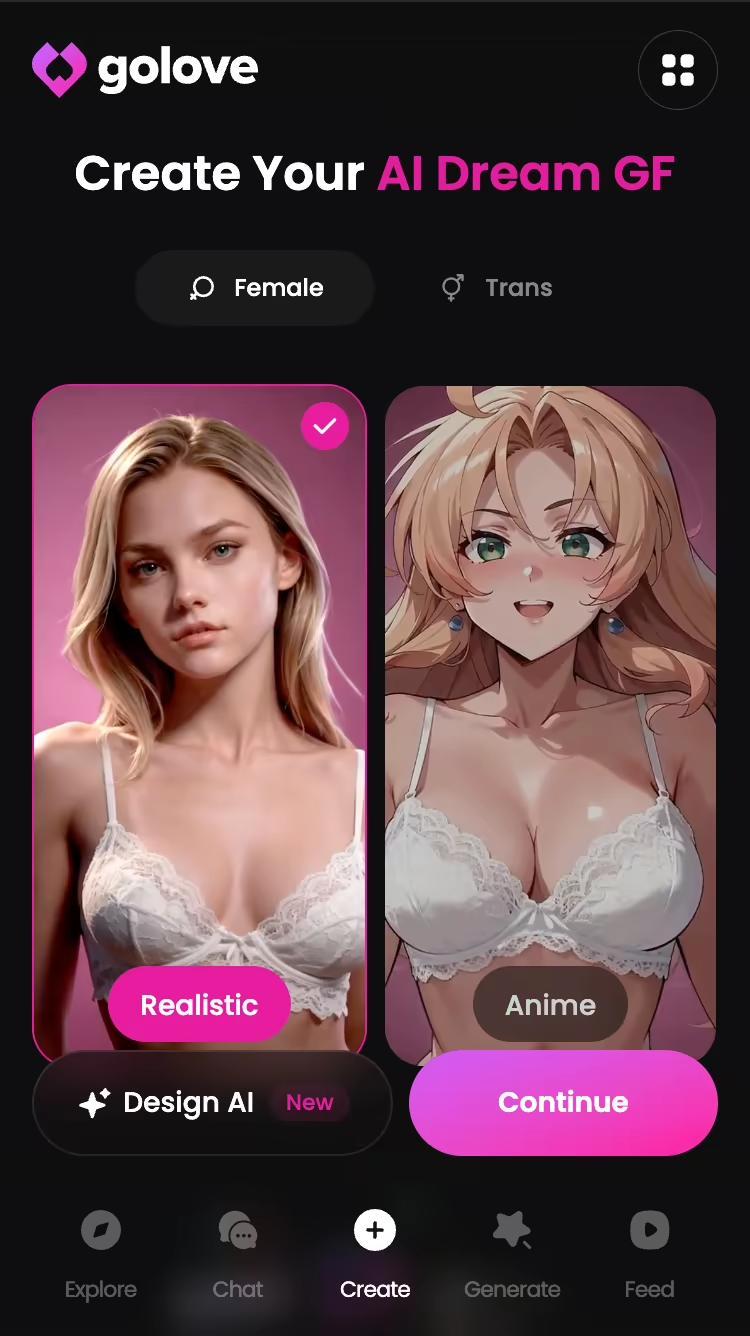
Everything below is the proof, not the pitch. Three build categories (Realistic, Anime, Trans) plus a Design with AI option where you describe a concept in text and it generates the character. And if you'd rather calibrate your taste against finished builds before you commit to your own — that's the fastest way in.
What People Actually Mean by "Dream Studio"
Here's what got me curious in the first place. "Dream Studio" is OurDream AI's character-customization tool, but the phrase has drifted into shorthand for any build-your-own-companion interface — the way people say "Photoshop" when they mean any image editor. So a lot of that search traffic isn't hunting for one product at all. It's after the experience the name promises: a studio, sliders, a character that comes out the other end feeling like yours.
My first attempt at a studio-style build was a letdown. I'd expected something closer to a character sheet and got a template picker instead — face A, body B, done. Fair enough as a starting point. But nothing I chose changed how she actually talked, and that gap between visual customization and behavioral customization is the thing nobody warns you about; it's why I ended up working through the AI girlfriend apps I compared before settling on anything.
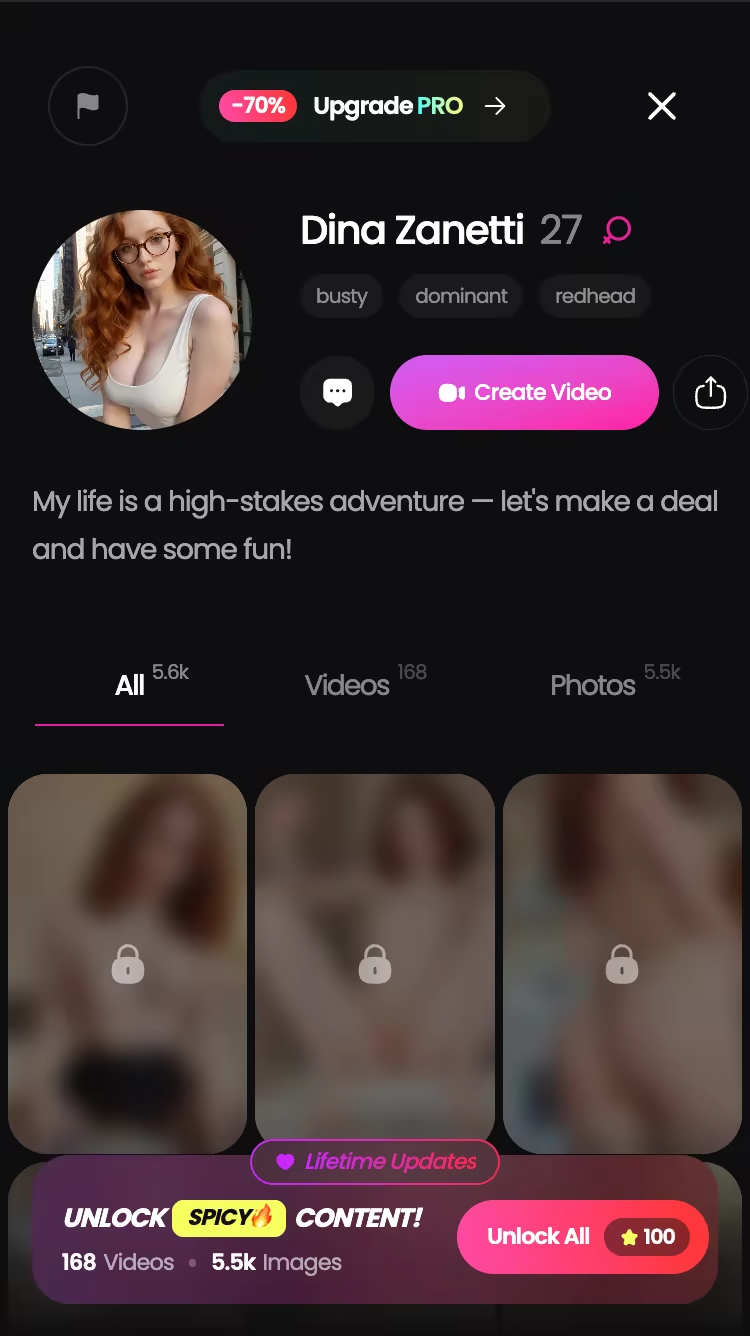
It helps to see finished characters first. Barbara (@dixie) runs a temptress read, Lexie (@iamlexiebabe) is the gamer archetype, and Jessica (@HotlineJess) leans dominant — three completely different conversational feels out of the same engine.
Characters Worth Trying
Tap any character to start a chat


Building Her: The Actual Click Path
Let me walk through what I clicked, in order, because this is the part every "Dream Studio" post skips.
- Category first. Realistic, Anime, or Trans — this isn't cosmetic, it changes the entire asset pool downstream, including which picture poses and video modes are available later. Realistic carries the largest set; anime carries its own hentai-specific modes.
- Appearance. Body type, hair, style, ethnicity — presented as visual presets rather than a wall of numeric sliders. The presets were faster, and I say that as someone who normally hates presets.
- Design with AI as the shortcut. If you'd rather not click through every panel, you describe the concept in plain text and it generates the character for you. I used this for my second build and it took about a minute.
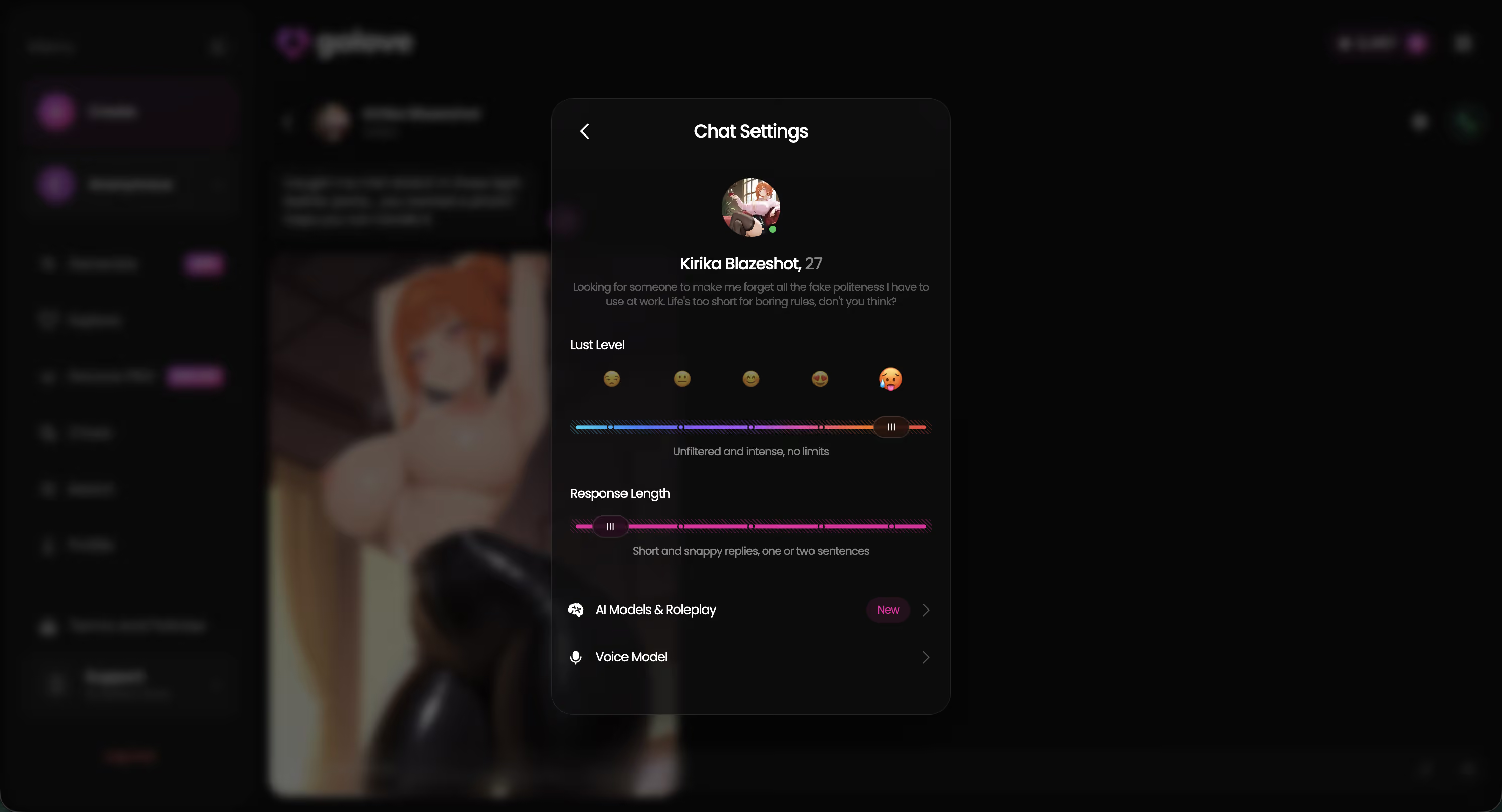
Then comes the part that matters more: personality. Traits, backstory, and two sliders that quietly do most of the heavy lifting — a lust level running 1 (sweet, wholesome) to 5 (unfiltered), and a response length running 1 (short and snappy) to 5 (rich and immersive).
I'd argue those two sliders are the real studio. Looks lock in during the first ten seconds of a chat and then stop registering; the way she paces a reply is what you're still noticing on day nine. I built one character at length 2 and an otherwise identical one at length 5, and they read like different people. If you want more on that split, building a custom character properly covers the personality side in depth.
Before and After: Static Studio vs a Character Who Keeps Going
The failure mode of most studio tools is that the build is the product. You finish, you get a locked avatar, and from then on she's a fixed render with a chat box bolted to the side. Nothing you decided during the build feeds forward.
What changed my read on GoLove was watching the build choices survive contact with an actual conversation. Memory carries history across sessions, so the backstory I wrote wasn't a one-time prompt — it kept surfacing weeks later, unprompted, in ways I hadn't scripted.
Three things happen after the build that a static studio can't do:
- Photo requests in chat — you ask for an image mid-conversation and it arrives in the thread, matching the character you built rather than a generic model.
- Photo-to-video — any photo can be turned into a clip from inside the chat, with a Select Action modal for choosing what happens.
- Relationship progression — the character's tone shifts over time instead of resetting to factory default every session.
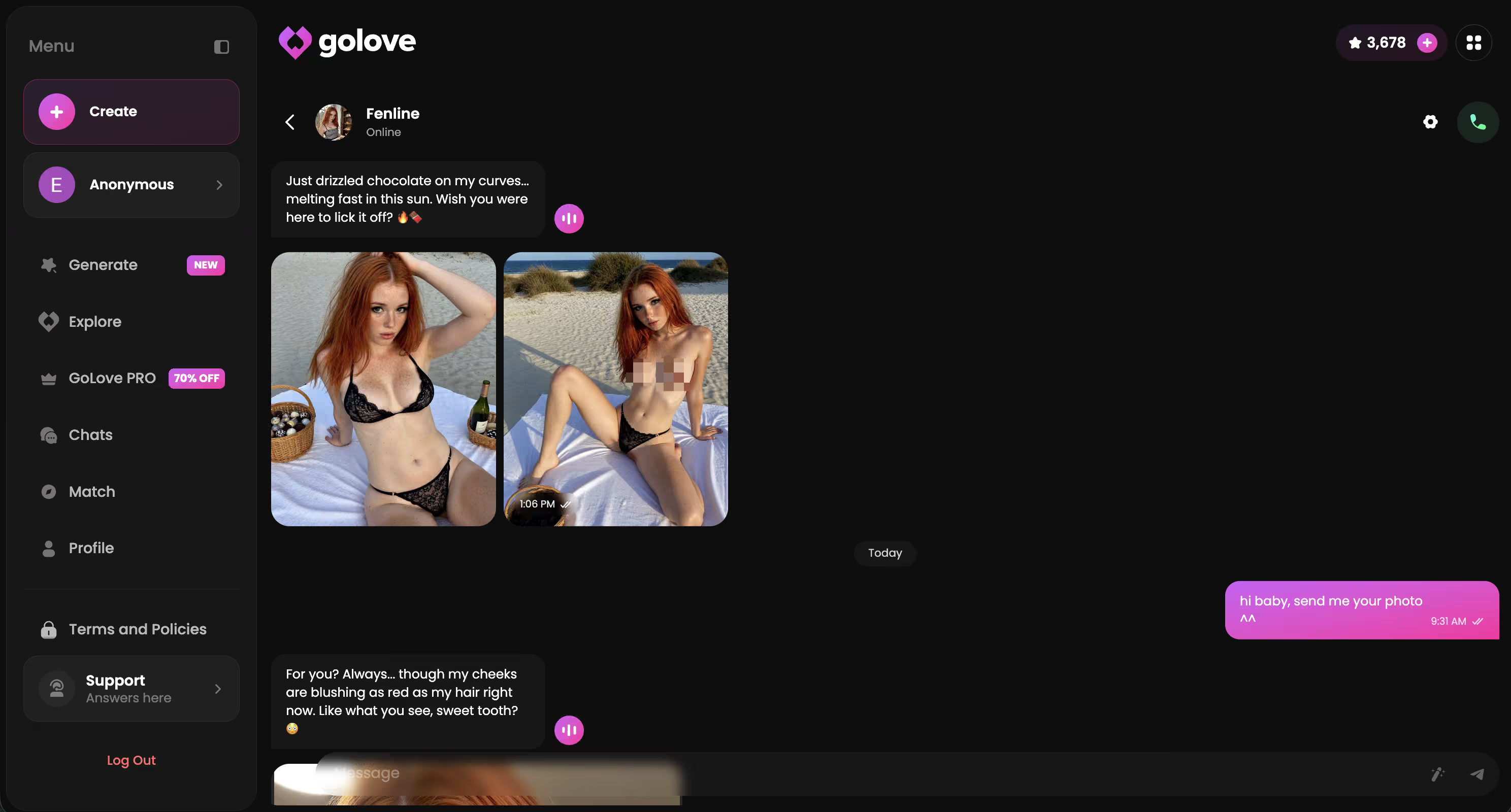
The generator behind all of this is per-character, and the scale is where the difference gets concrete: 35 realistic picture poses, 21 outfits, 34 backgrounds, batches of 2, 4 or 8 — and 76 realistic video modes on the video side. That's the same generator that produces the clips in the Feed, not a stripped-down version. If you've just spent twenty minutes building a character, this is the step where she stops being a portrait.
What's Free to Build and What Isn't
Building costs nothing. That's the honest headline — you can go through the entire creator, appearance and personality both, and start chatting without paying or handing over an email. What costs money is volume: generated photos, generated videos, and unlimited Feed access.
Generation runs on Stars, the in-app currency shown in the header. You get 2 free Stars per day just for showing up, which is enough to keep experimenting but nowhere near enough to run a photoshoot.
| Plan | Approx. price | What it buys |
|---|---|---|
| Free | $0 | Full character build, chat, memory, 2 daily Stars |
| GoLove PRO (monthly) | ~$19.99/mo | Unlimited Feed, Feed filters, premium tier |
| GoLove PRO (annual) | ~$119.88/yr (~$9.99/mo) | Same, cheapest per month |
| Star packs | ~$9.99 – ~$179.99 | Generation credits, bought as needed |
Three things to know before you pay:
- Region matters. I've seen PRO as low as roughly $12.99 in some geos — the number you see may not be the number I saw.
- Promos are constant. A -70% upgrade banner was live in July 2026; a -50% promo ran earlier in the year. Don't buy at sticker price on impulse.
- Stars are separate from the subscription — PRO isn't a generation buffet.
Prices checked 2026-07; promos vary.
The Trade-Off You're Making With GoLove.ai
Nothing here is free of cost, and the cost with GoLove is decisions.
Some competitor studio tools hand you a polished, pre-built template — three clicks, a beautiful render, done. There's real appeal in that, especially if you're just curious and don't want a project. GoLove asks more of you: category, appearance, traits, backstory, two behavioral sliders you have to actually think about. My first build took maybe twenty-five minutes, and about ten of those were me staring at the personality field, wondering what I actually wanted from it.
Which makes you wonder whether that friction is a bug at all. The template flow gives you something that looks finished in ninety seconds; the manual flow gives you something that still feels like yours on week three, because you made the choices that shaped how she talks. I read somewhere that we don't attach to faces so much as to patterns of attention — and patterns are exactly what those sliders decide. I'd take the second flow. I understand people who wouldn't.
Fast and disposable? The template picker wins. If you want depth, the extra twenty minutes is the price.
Before You Start Building
I wasted my first session redoing basics, so here's the short list I wish I'd had open.
- Decide the tone before the face. Sweet, teasing, dominant, dry — write it down in a sentence. The lust level slider (1 to 5) enforces it, but only if you know which end you want.
- Pick your response length honestly. Short and snappy reads natural in quick exchanges; rich and immersive reads better if you like long evening conversations. Mismatching this is the single most common reason a build feels off.
- Write two lines of backstory, not ten. Memory carries it forward, and a tight premise gives the character room to develop instead of boxing her in.
One more thing worth noting: build a second character. Not because the first one fails, but because comparing two makes it obvious which settings were doing the work. Ten-minute experiment, saves you a week of guessing — the same approach I took in my full walkthrough of the creation flow.
My Verdict
> The pick: GoLove.ai. The best "dream studio" build flow isn't the one with the studio in its name — it's the one that lets you start customizing before it asks who you are, and then carries those choices into every conversation afterward.
Who's it actually for? People who want a character that evolves rather than a one-off render. If a nice picture is the whole goal, plenty of tools will hand you one faster. But if you want the personality you wrote in the creator to still be recognizable a month later — memory intact, tone consistent, photos and video generated from that same character rather than a stock model — this is the flow I'd point you at.
Three evenings in, the thing I kept coming back to wasn't the appearance panel. It was that the build actually mattered downstream.
You can open the creator right now, make every choice, and see the result without an email or a card. That's the whole argument.
Frequently Asked Questions
Related Articles

Dreamy AI Girlfriend: What Sets the Best Apart
Dreamy AI girlfriend, decided — GoLove.ai wins on voice and memory continuity. See how it beats OurDream AI, instant-access needed to start.

Dream AI Girlfriend Voice Call
Dream AI girlfriend voice call, tested — GoLove.ai wins with real-time voice and memory that carries between calls. Try it, instant-access.

Custom Dream AI Girlfriend: Build Your Perfect Match
Custom dream AI girlfriend guide — GoLove.ai wins with real memory, live voice, and photo-to-video. See how to build yours — no email needed.

OurDream AI vs GoLove: Honest Test
OurDream AI vs GoLove.ai — GoLove wins on live voice calls, photo-to-video, and memory. Compare pricing and features before you choose.
This article contains affiliate links. We may earn a commission at no extra cost to you if you sign up through our links. See how we test.