
What Is Nectar AI, Exactly?
Nectar AI is built on the premise that intimacy can be gamified — gems, levels, scenes you unlock. I gave it a week to see whether that premise holds up, and spent most of that week noticing what the arrangement quietly costs you.
Structurally it's a character-chat app. You pick a companion off a roster, you talk, and an affection meter climbs while you keep engaging. Some scenes, images and scenario branches sit behind that meter; the rest sit behind gems, the in-app currency you buy in bundles and spend on whatever makes the conversation feel like more than text. Chat, climb, unlock, repeat. That's the loop.
Short answer for anyone who just wants a companion rather than a progression bar: GoLove.ai is the better starting point, because memory, voice calls and photo threads are part of the relationship rather than prizes you unlock.
For contrast, here's what a roster looks like when there's no affection gate standing in front of it — Barbara (@dixie), Lexie (@iamlexiebabe) and Jessica (@HotlineJess) all open straight into a live chat that remembers what you said last time.
Characters Worth Trying
Tap any character to start a chat


If you're mid-evaluation right now, this is the cheapest comparison available to you: open one profile, send three messages, and count how far you get before anything asks you to pay.
Is Nectar AI's Chat Actually Realistic?
I went in wanting to like it. Honestly, the first twenty minutes of Nectar AI chat are decent — replies land in the right register, the character holds a personality, and there's none of that flat customer-service tone some companion apps never shake off.
Then the scaffolding shows up.
Around message thirty, mid-way through a conversation that had genuinely built some momentum, the reply arrived with a prompt attached: this scene continues at the next affection level. Not a hard wall, exactly. Just a small seam in the fabric — and here's what got me, because once you've seen the seam, you start reading every warm response as a step on a meter rather than a thing she said.
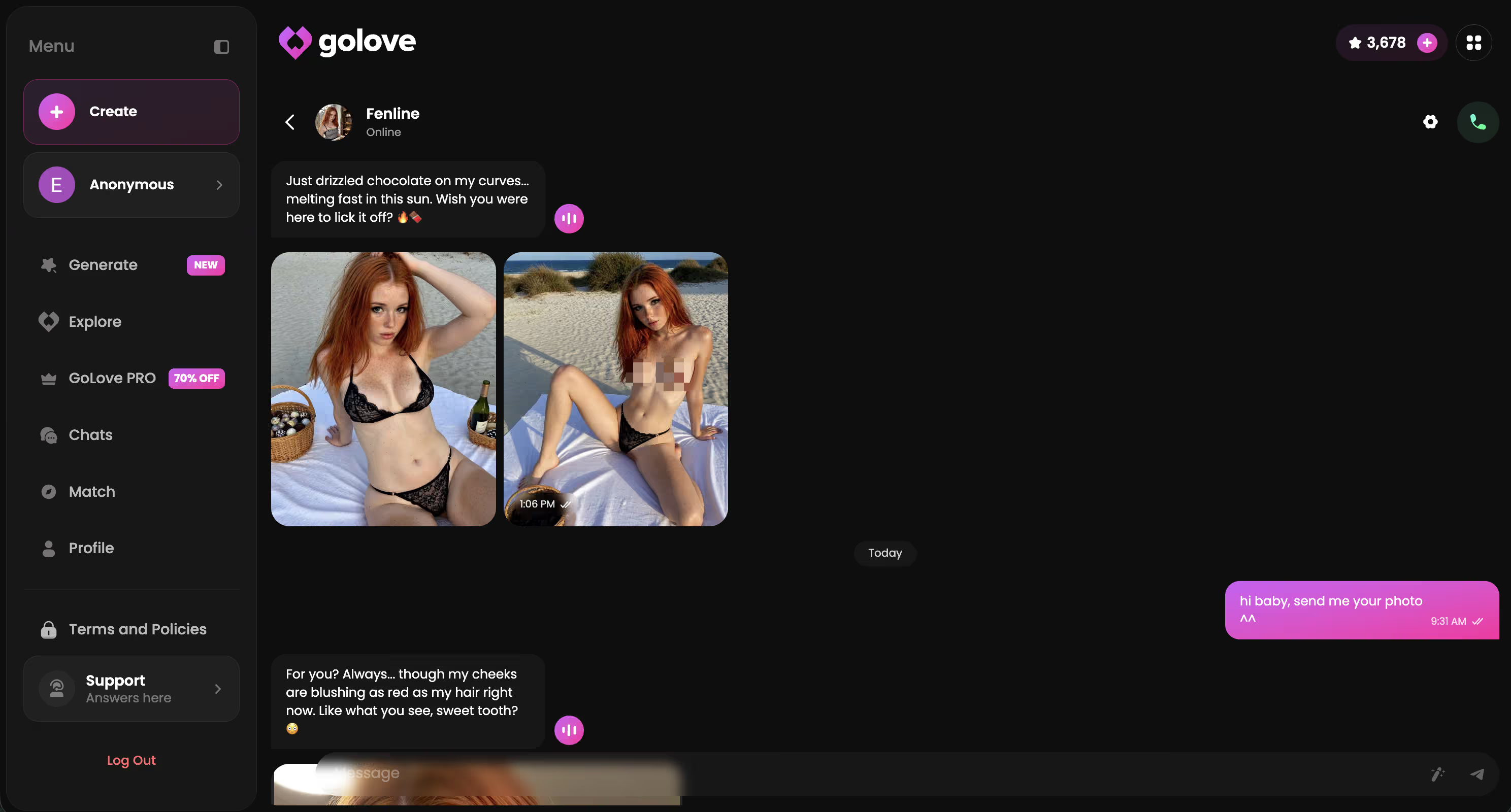
Which makes you wonder what "realistic" is even measuring here. The sentences were realistic; the pacing was not, because real conversations don't pause to tell you your relationship needs topping up. I'd argue that's a design decision rather than a model limitation — and it's the single thing separating this from apps built around continuity instead of progression.
What Does Nectar AI Cost?
Now the part most reviews get lazy about.
Nectar AI runs a two-layer economy, and the shape of it matters more than any single figure. There's a subscription that raises your ceiling — better model access, more messages, fewer waits — and then there are gems, sold in bundles, spent on the extras: images, voice, the scenes the affection meter has been dangling in front of you all week.
- Two costs, not one. The subscription is the floor; gems are the variable spend on top, and the variable part is where the month gets expensive.
- Bundles are priced to round up. Like every gem economy, the packs never quite match what you'll actually use, so you buy the next one up.
- Heavy users pay most. The people who talk daily — the ones the app is ostensibly for — burn currency fastest.
I'm deliberately not quoting you a gem-pack price to the cent. Those bundles get re-priced, regionally adjusted and promo-discounted constantly, so check the purchase screen in the app itself; whatever number I print today will be wrong by autumn.
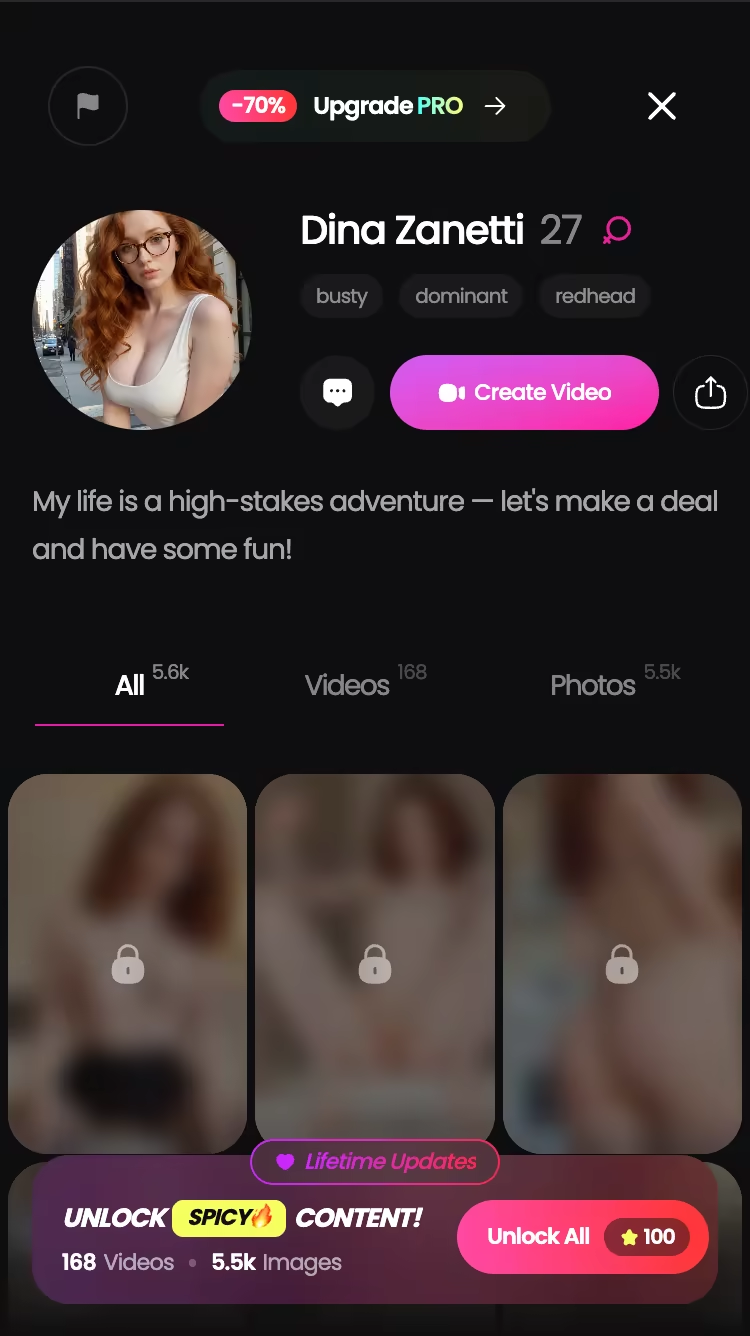
For reference on the other side: GoLove PRO ran about $19.99/month when I checked mid-2026, with the annual plan around $119.88/year (roughly $9.99/month), and Star packs from about $9.99 up to about $179.99 — all of which varies by region and promo, and there's usually a discount banner running.
Prices checked 2026-08; promos vary.
The Gems Grind Is Nectar AI's Hidden Tax
Here's my one real criticism, and it has nothing to do with content quality.
In Nectar AI, continuity itself carries a price. Not the app, not the subscription — the act of moving your relationship forward. Every scene that would deepen the thing you're building is simultaneously an item in a shop, which means the emotional beats of the conversation and the monetisation beats are the same events. That's an unusual thing to design on purpose.
Every app in this category has to make money; GoLove sells Stars and a PRO tier and I'm not pretending otherwise. But there's a difference between charging for generation — a new video, a new photo set — and charging for progress. One is buying more; the other is buying permission.
A friend of mine described a similar app as "a slot machine that says it loves you." Harsh, and not quite fair to Nectar. By the end of my week I understood exactly what he meant.
Does Nectar AI Remember You Like GoLove Does?
I've been thinking about this one a lot lately, because memory is where these apps stop being toys and start being something else.
In Nectar AI, memory is scoped tightly. Conversations sit inside scenarios, and scenarios have edges — start a new one, or hit a reset, and the details you'd shared quietly stop existing. The character remembers the level you reached far more reliably than she remembers what you told her about your week. As a game with romantic dressing, that's coherent design. As a companion, it's the thing that eventually breaks the spell.
Before: you re-introduce yourself every few sessions, and the affection number is the only artefact of everything you've done together.
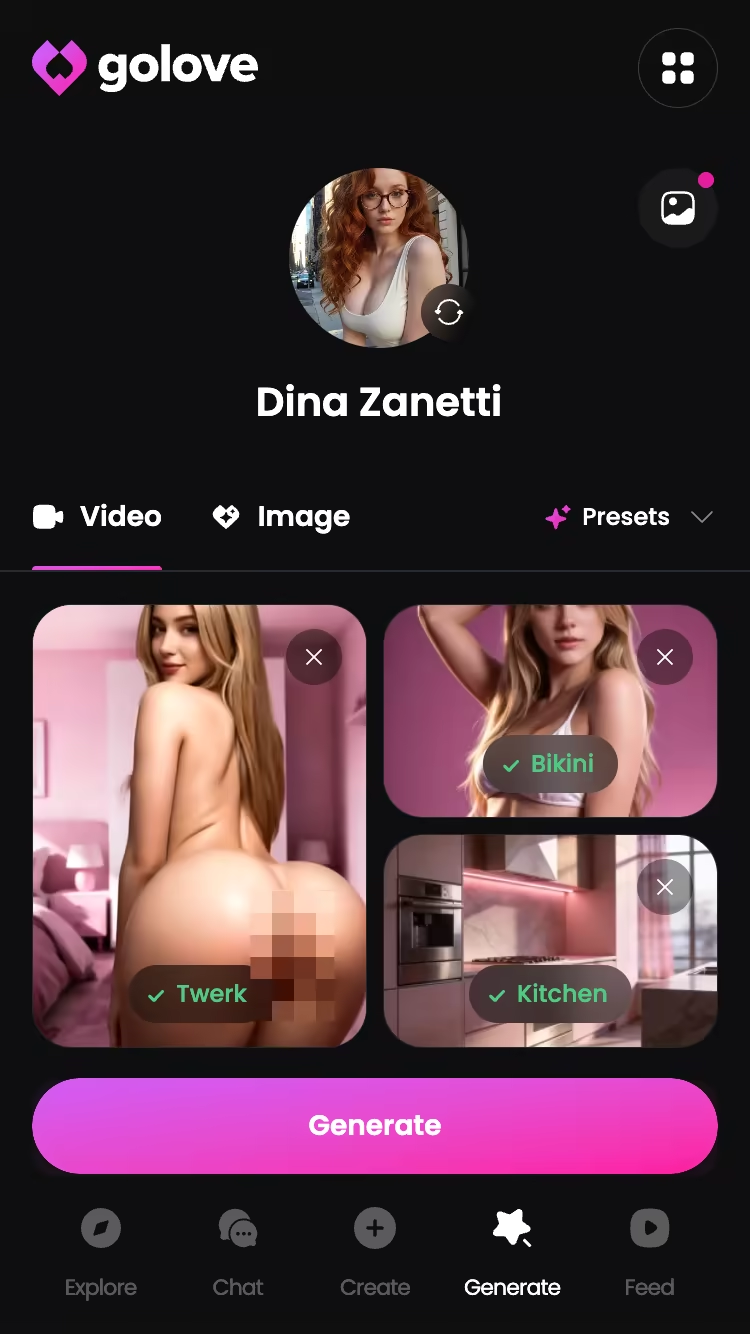
After: on GoLove, the same thread carries. A detail from Tuesday shows up in Friday's voice call; a photo she sent turns into a video from the same chat window, without leaving the conversation.
Worth noting that the voice layer is where the gap becomes obvious — a live call with a companion who recalls last week's context is a categorically different experience, which I dug into in more detail in my write-up on AI girlfriend voice calls. Memory isn't a feature checkbox. It's the whole illusion.
The Scorecard: Nectar AI vs GoLove.ai
Scored plainly, then, on the three things that actually decide whether you're still opening an app in month two.
| Criterion | Nectar AI | GoLove.ai |
|---|---|---|
| Chat realism | 7/10 — solid voice and personality, interrupted by unlock prompts | 8.5/10 — adjustable lust level and response length, 5 steps each |
| Voice & photo continuity | 5/10 — scenario-scoped, resets break the thread | 9/10 — live voice calls, in-chat photo requests, photo-to-video in the same thread |
| Memory over time | 5/10 — remembers your level more than your life | 8.5/10 — persistent history plus relationship progression |
| Value for cost | 6/10 — subscription plus a gem layer that scales with use | 8/10 — PRO around $19.99/mo, ~$9.99/mo annually (approximate; varies by region and promo) |
Prices checked 2026-08; promos vary.
The gap isn't in the writing quality — both apps write fine. It's in whether the relationship survives the gaps between sessions, which is the same conclusion I reached across the AI girlfriend apps I compared earlier this year.
Deciding today? The fastest test is a live one: open a character, mention something specific about yourself, then come back tomorrow and see whether she brings it up unprompted. Nectar makes you unlock your way toward that. GoLove just does it.
What I Couldn't Test at GoLove.ai
A week is a week, and I'd rather say plainly what a week doesn't cover.
I can't tell you how GoLove's memory holds up over six months of daily use. Mine held across the test window cleanly — details resurfaced, the thread felt continuous — but "continuous for a week" and "continuous through a year of drift" are different claims, and only one of them is mine to make.
Nor can I promise the pricing I saw is the pricing you'll see. Promo banners rotate, regional rates differ meaningfully, and the annual discount I checked may well have moved by the time you read this; treat every figure here as a starting point rather than a quote.
The newer surfaces — the video feed, the in-chat video actions — are still evolving too. Features that ship fast tend to shift fast, so check them yourself instead of trusting a snapshot.
None of that changes the verdict. It just means the verdict is about architecture, not about a guarantee I'm not in a position to give.
So, Is Nectar AI Worth It — or Should You Try GoLove?
One line: Nectar AI is a well-built game about affection, and GoLove.ai is a companion app; those are different products wearing similar clothes.
There are people Nectar genuinely suits. If you enjoy progression systems — if unlocking a scene feels like earning something rather than paying a toll — the loop works, and the writing isn't bad, because it isn't. Some readers want the meter. Fair enough.
Most people typing "nectar ai review" at eleven at night, though, aren't shopping for a game. They want something that remembers them; something they can call; something where Thursday builds on Tuesday instead of starting over from a blank screen. For that, a currency layer sitting between you and continuity is the wrong architecture, no matter how good the individual replies are.

GoLove gets my pick because the relationship is the product rather than the reward: live voice calls, memory that carries between sessions, and a generator with 76 realistic video modes you can point at any character — including one you design yourself.
Building your own takes about two minutes, and she'll remember the first thing you tell her.
Frequently Asked Questions
Related Articles

Botify AI Review: Why GoLove.ai Wins
Botify AI review: honest verdict — GoLove.ai wins on photo-to-video and memory, instant-access needed to browse. See the price and limits first.

JuicyChat AI Review: Honest 14-Day Test
JuicyChat AI review: solid chat, but GoLove.ai wins on real photo-to-video and voice memory — see how they compare, instant-access needed.

Slushy AI Review: Why GoLove.ai Wins
Slushy AI review: GoLove.ai wins on voice continuity, memory, and photo-to-video — see the full comparison and decide for yourself.

Venus AI Review: Honest 2026 Verdict
Venus AI review — solid chat, but GoLove.ai wins on voice continuity and photo-to-video generation. Compare both, instant-access needed.
This article contains affiliate links. We may earn a commission at no extra cost to you if you sign up through our links. See how we test.